

You’ll Never Work Again: How Kerry Proved Them Wrong
22 April, 2026
By Richard Biddle
If you are lucky enough to get Disney Plus, then you might be one of the many who tuned into the eagerly awaited third series of ‘Welcome to Wrexham’ this April. In 2021 Hollywood actors Ryan Reynolds and Rob McElenney purchased Wrexham AFC from the Wrexham Supporters’ Trust, who had rescued and run the club since a winding up order was issued in 2011.
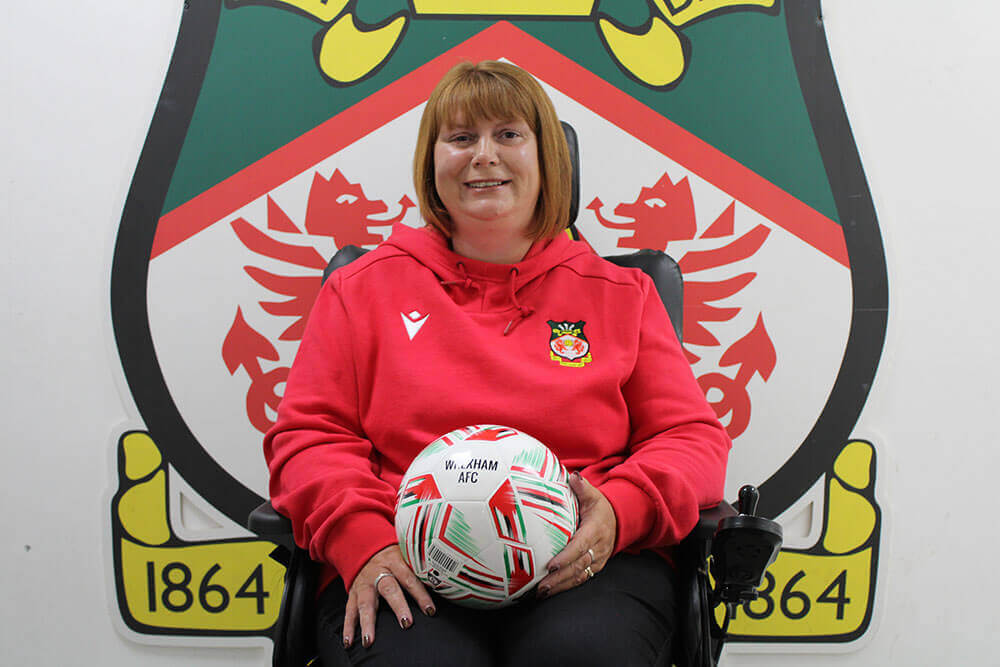
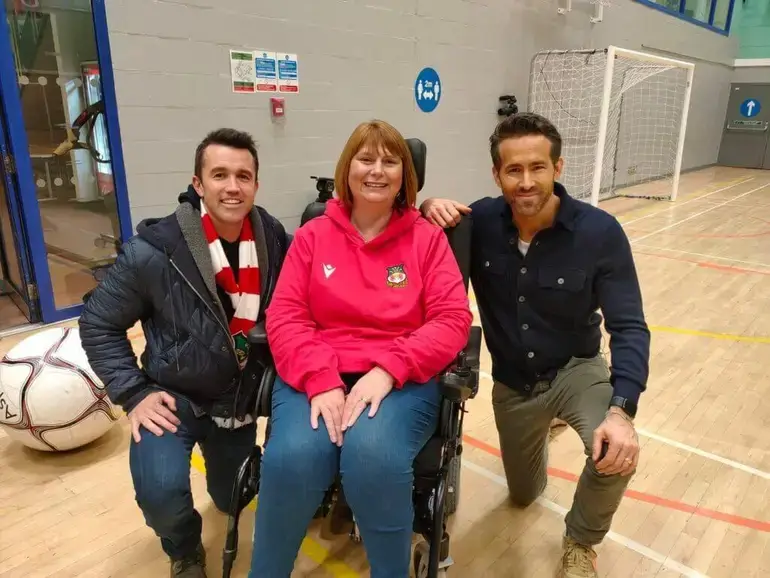
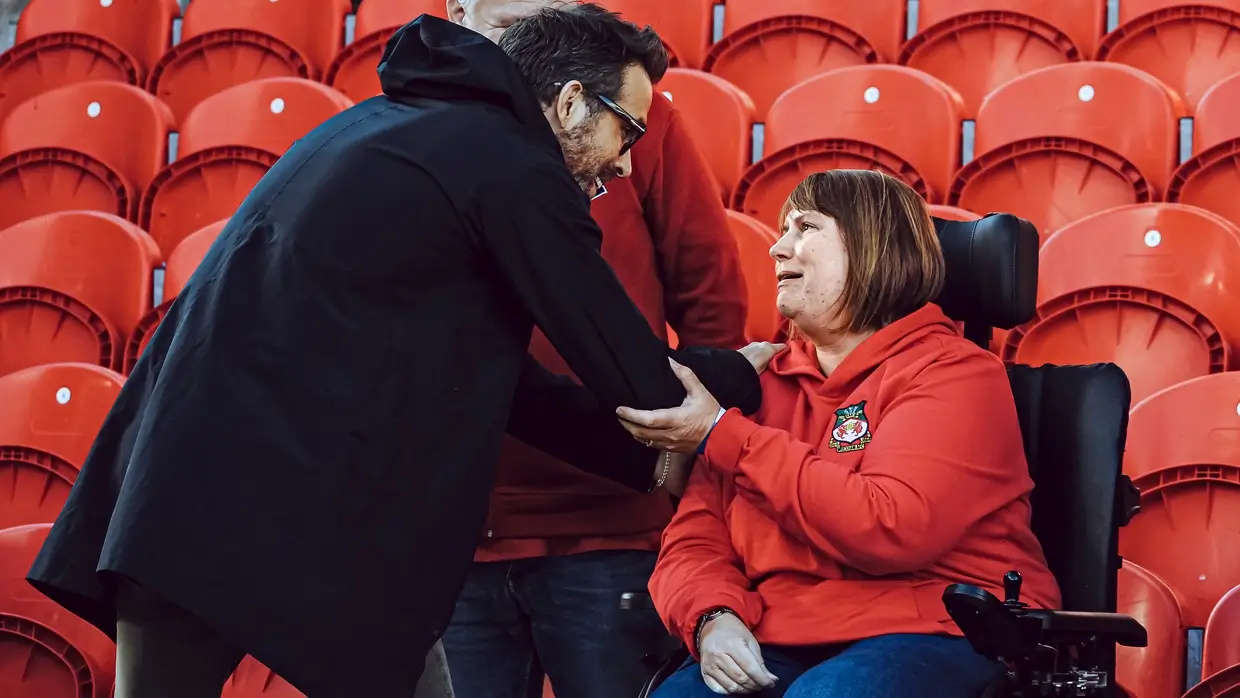
The first series screened in 2022 to critical acclaim. It charted life under the new owners as attempts were made to revive Wrexham’s fortunes on the pitch and re-establish the club’s centrality in the local community. Fast forward to today and Wrexham AFC is thriving. One person who has made a significant contribution along the way is Kerry Evans, Wrexham’s Disability Liaison Officer (DLO).
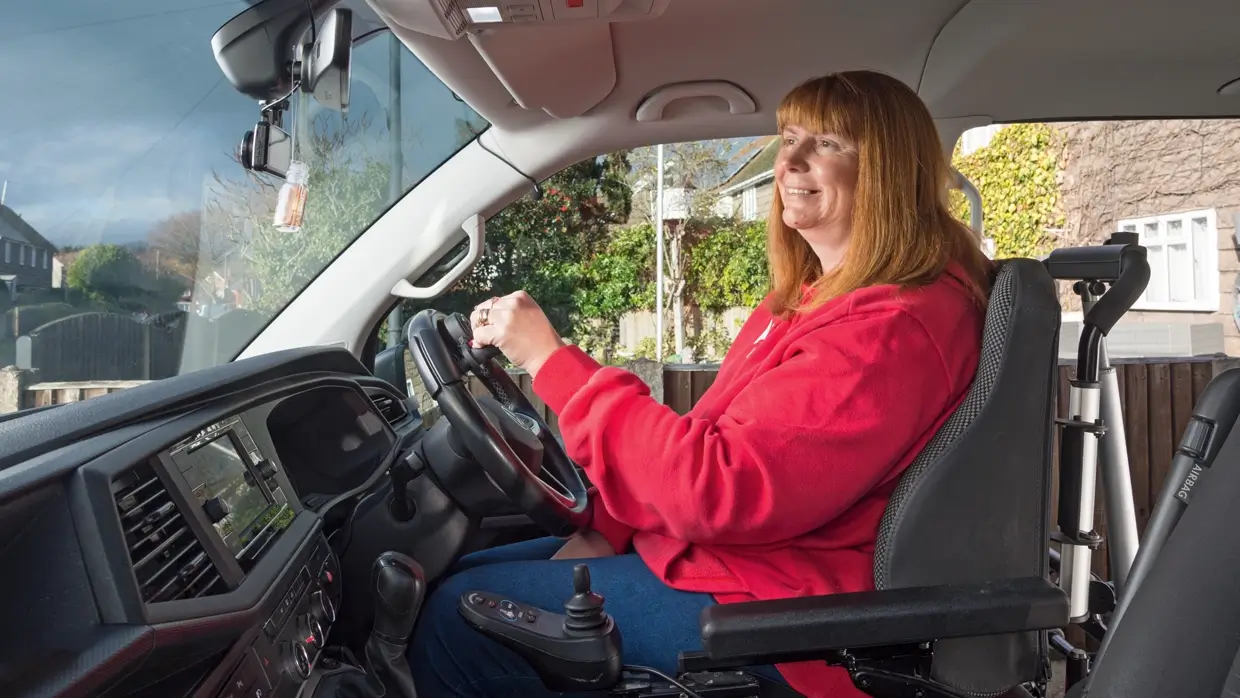
Kerry’s is a truly remarkable story. It’s the story of a woman utterly determined to make the club accessible to all. It’s the story of a woman who has overcome significant challenges of her own. It is the story of a woman with two stomas. Kerry was born with cerebral palsy, the effects of which manifested themselves on her right side with a slight limp and clenched fist. She was able to attend mainstream school and enjoyed a normal childhood.
Even now, Kerry can remember how lucky she felt at hospital check-ups on seeing the terrible effects the condition had on other children. After school Kerry’s life proceeded in a pretty run-of-the-mill kind of way. She started work, found a partner, had a daughter, and got married. But then in 2005, shortly after her 30th birthday, Kerry’s world was turned upside down. She was going to get something from the fridge and collapsed.
The cause was a cerebral bleed, which happened without warning. Kerry hadn’t even been feeling unwell that day. Kerry was left wheelchair bound and paralysed, with no feeling on her right side. Even getting in and out of bed was impossible without the use of hoists. She could no longer work and didn’t expect to ever work again. She was also told she would never walk.
It’s impossible to imagine how difficult this must have been for Kerry and her family trying to cope with such a traumatic event and rapid change in their circumstances. Quite unbelievably, the social worker assigned to Kerry told her that she and husband wouldn’t stay together. Thoughtless and hurtful as this was it says much about the magnitude of what had happened. The prediction proved wrong, instead the opposite happened. It strengthened their relationship, making them the formidable team that they are today.
Over the next five years Kerry and family adapted to their new way of life. A grant enabled alterations to their home, making it more suitable for Kerry’s needs. But Kerry continued to suffer. Along with being paralysed on the right side of her body, organs were affected too. This caused bowel and bladder issues. A supra-pubic catheter was fitted, but this was a source of constant pain for Kerry as her body basically rejected it.
It was in 2009 that the possibility of a urostomy was first mentioned by her medical team. Her consultant then decided that it would be advisable to do a colostomy as well.
Kerry was petrified by the thought of such major surgery, particularly as there was no cast iron guarantee that she would survive it. But the ongoing issues she was facing, particularly with the catheter tipped the balance.
Afterwards, Kerry’s stoma care nurse said she had never come across a patient so accepting so quickly of their stoma(s). Kerry says this was down to the fact that with her stomas she was almost instantly out of pain; pain she had lived with for the past five years.
She was also just relieved that the surgery was over.
As readers will know, it’s a steep learning curve post-operatively. Just like everyone else Kerry went through the ups and downs of finding the right type of bag, dealing with leaks etc.
Her husband was involved in this journey right from the very start. As Kerry only has one working hand, he has aided Kerry with her stoma from the beginning. Kerry was also open with her daughter and family and friends, which she feels helped normalise things.
Kerry’s stomas gave her a new quality of life, and because of this she was able to develop a positive relationship with them.
Wrexham AFC has been a part of Kerry’s life since she was small, with both her dad and her brother being fans. Her husband had also been a supporter since he was a child.
After what happened in 2005, Kerry’s husband gave up work to be her full-time carer.
When ownership of the club passed to the Supporters’ Trust, they became season ticket holders and Kerry’s husband took on a voluntary role working one day a week for the club’s radio.
This involved doing things like interviewing the players. It was through this that Kerry discovered that there was a vacancy for a volunteer DLO.
It was now 2016 and having become accustomed to her new ‘normal’, Kerry was eager to return to some form of work.
Having seen DLOs at other clubs she thought it was a role she could do, being under the impression that it was largely about meeting and greeting disabled fans on match days, showing them where the toilets were and giving them a blanket.
Hence Kerry decided to apply. It was a huge step for her, given that back in 2005 she had been told she would never work again, or indeed, had anything to offer an employer.
Kerry was one of many applicants. Despite feeling she had messed up the interview, she was offered the job two days later and told that she was the best candidate by far. It soon became clear that the role wasn’t as simple as she had thought. She had to attend meetings about legislation and access.
She also discovered that she was one of many volunteers: an army of people doing what they could to keep the club going. It proved a defining period for Kerry. She realised that she could work and that she did have something to offer. It gave her confidence.
She also started to work as much as six days a week, ‘growing’ the role as she did. She loved every minute of it because it gave her purpose. It wasn’t long before people were saying to her: “I can’t believe what you’ve achieved!”, to which Kerry would reply: “Nor can I!”.
One of her first ‘wins’ was to secure funding to hire a minibus to take disabled fans to away games.
She achieved this by selling red blankets at match days (Wrexham’s kit is red). She sold 675 and ever since has been known as Kerry Red Blankets.
The purchase of the club by Ryan Reynolds and Rob McElenney took place against the backdrop of the pandemic.
As a consequence, it wasn’t possible for them to visit Wrexham initially. Instead, they hosted a massive zoom meeting where they asked fans what they wanted. Prior to this Rob spoke with all the important people in the club. Kerry has happy memories of the call from California she received one evening in February 2020.
Eight months later she got to meet Ryan and Rob in person when they asked her to become a fulltime member of staff. You might think that Kerry would have jumped at the chance, but to begin with she hesitated. It wasn’t a decision to take lightly and at the back of her mind lurked fears about her health and whether she could trust it.
She didn’t sign on the dotted line until March 2021. Kerry says that the club has gone from strength to strength under its new owners. Anyone who has seen ‘Welcome to Wrexham’ is sure to agree. Importantly, it has enabled Kerry to really get on with what she wants to achieve. The new owners are fully on board with the changes she has made and wants to make.
The list is already impressive. Wrexham was the first club to host an autism-friendly game. After this Kerry thought why just one game? and so subsequently worked with the National Autistic Society. The club now have a sensory room, a quiet zone and familiar face stewards. Before this, families with autistic children couldn’t come to matches.
Provision has also now been made for fans with dementia. Hearing loops have been installed throughout the hospitality areas and wheelchair viewing platforms built. Another group of fans have also recently benefited from Kerry’s unrelenting campaign to make football accessible to all: ostomates.
Unsurprisingly, this was a project close to Kerry’s heart. She says that it involved little cost to the club, but judging by comments received, the impact has been big. All of Wrexham’s toilets now have stoma friendly facilities, being equipped with a bin, shelf, mirror, and hooks on two levels to allow for wheelchair users who have stomas.
Following feedback from fans, Kerry is currently investigating a mat for those people who need/prefer to kneel when changing their bag. Aside from making football more accessible to ostomates, Kerry says that going stoma friendly has helped raise general awareness about stomas.
The new facilities are mentioned in match day guidance for example.
Kerry is very proud of this and so she should be.
Everyone at Colostomy UK wishes Kerry continuing success and would like to thank her on behalf of the ostomate community.
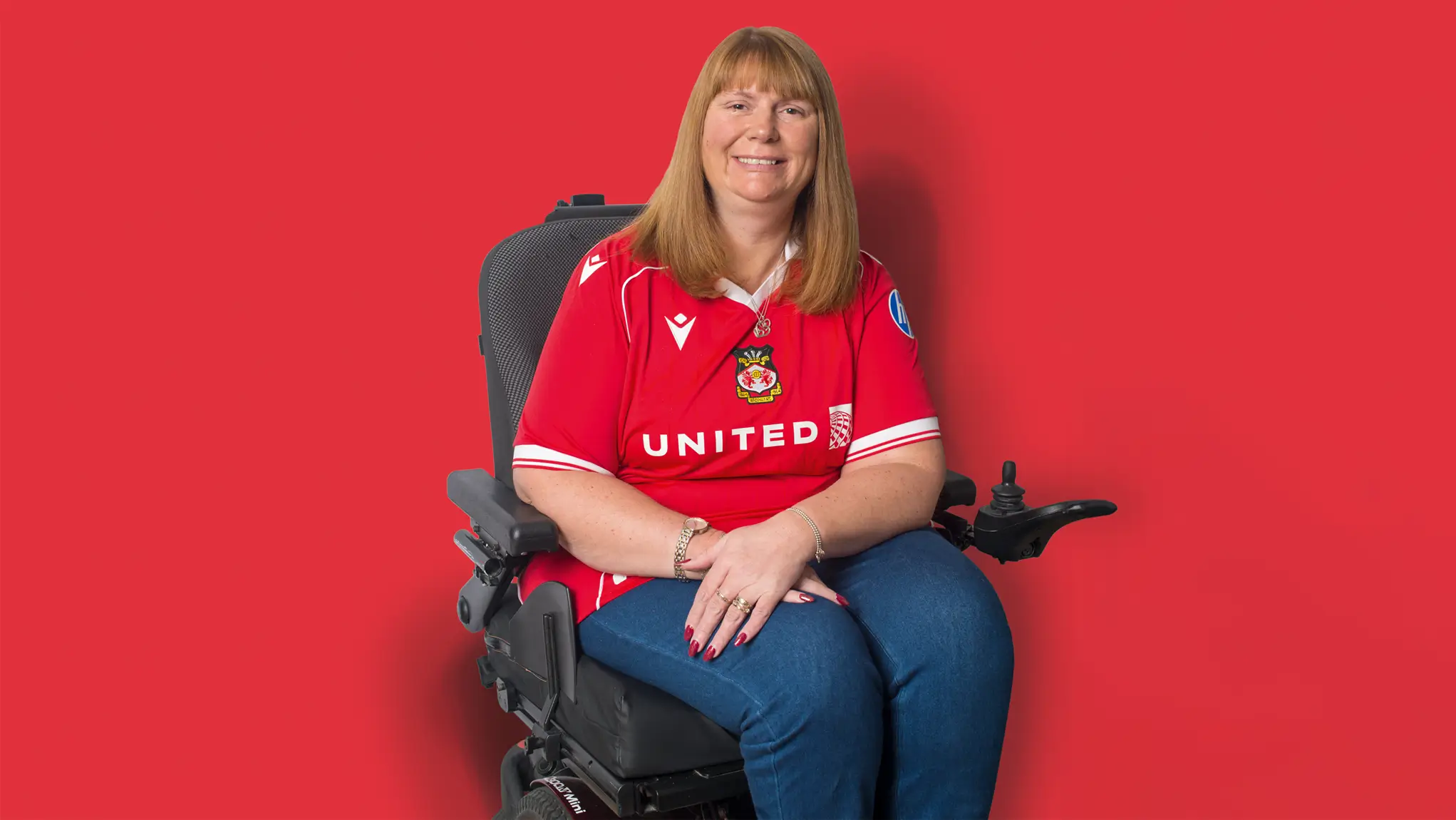
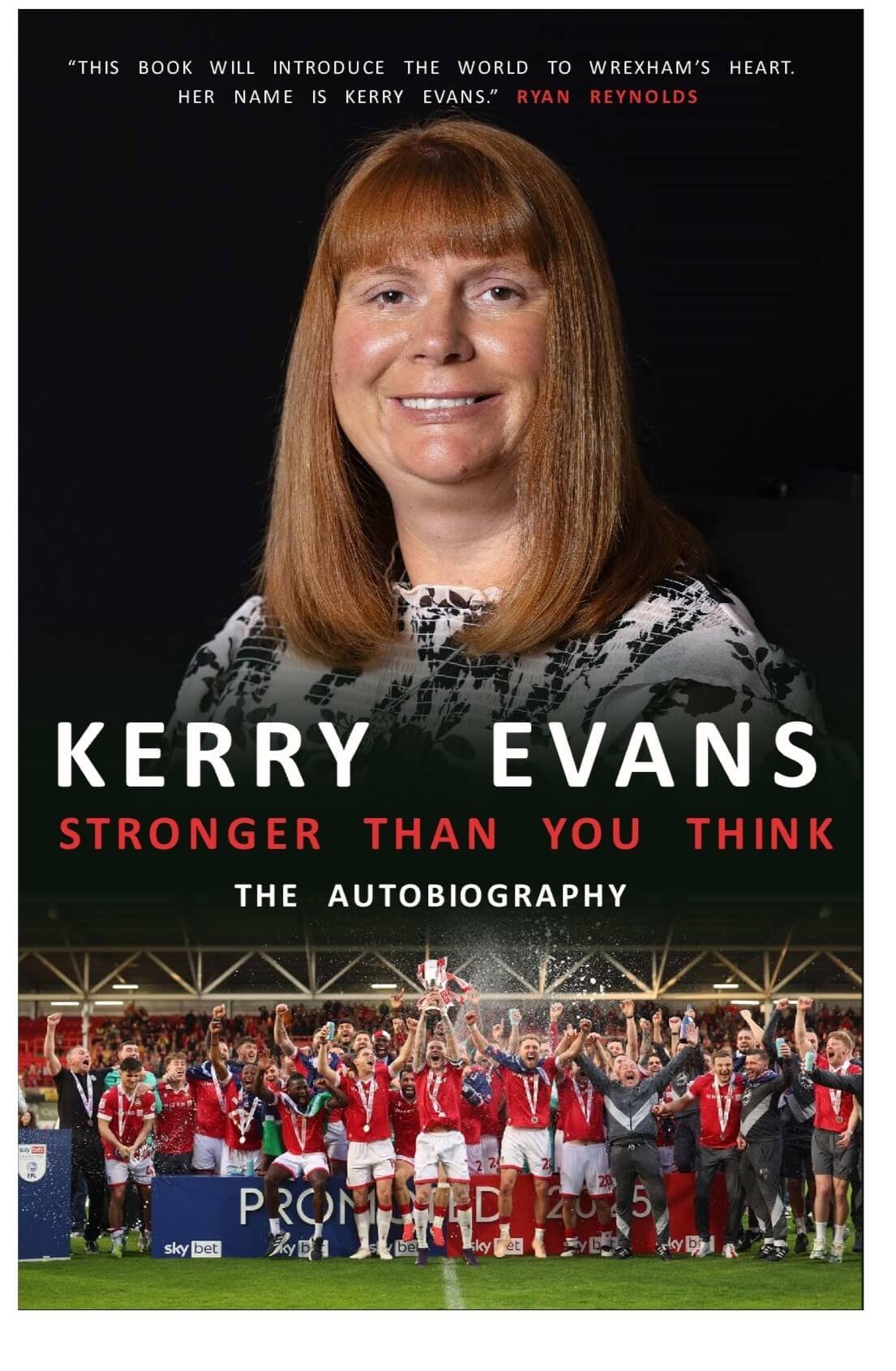
‘Stronger Than You Think’ is available at Waterstones, Amazon, and at Wrexham AFC club shop in store and online. Content Warning: Kerry’s autobiography includes graphic accounts of surgery and references to sexual abuse.
Support From Colostomy UK
We offer a wide range of support for people living with a stoma, including our free Stoma Helpline, live chat support, and opportunities to connect with others through local and online groups. We also provide trusted information and resources to offer practical advice, reassurance, and the confidence to live well with a stoma: colostomyuk.org/support