

I woke up from a coma with a stoma – and found my life again
26 May, 2026
By Izzy
Edited by Jillian Matthew
Izzy, 40, in Buckinghamshire, describes how a traumatic experience changed her outlook on life and gave her a new focus and purpose.
The person I was before my coma wouldn’t recognise the life I live now
I woke up unable to move, unable to speak, and with no idea where I was or even what year it was. At that moment, I couldn’t have imagined that this would become the starting point for a complete mental and physical transformation – a full reset on how I live, think, and see myself.
I was already in hospital when my colon perforated
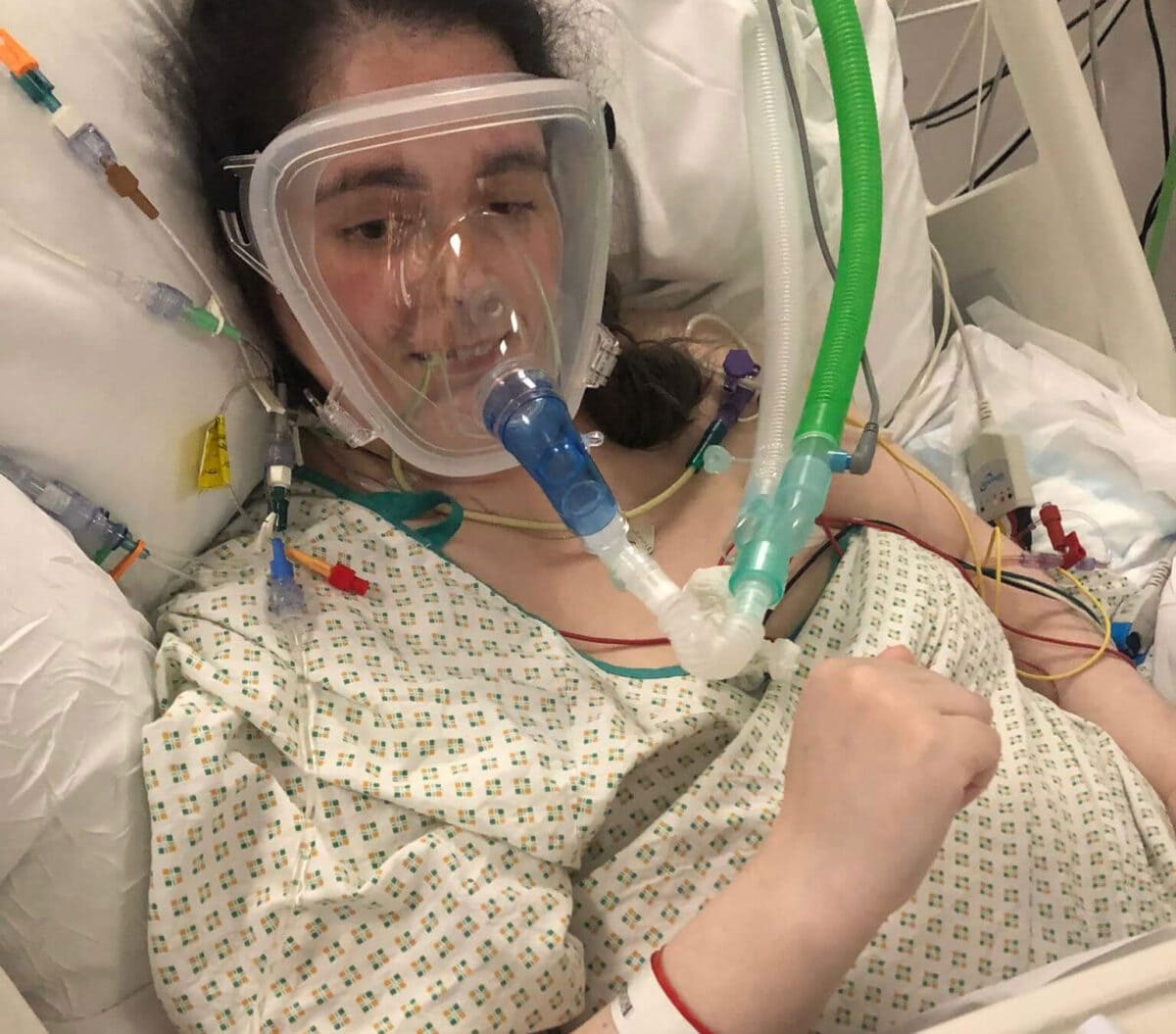
I was admitted with bad stomach pains in late 2022. I had a CT scan which showed that my colon was inflamed, but the warning signs weren’t picked up in time. What happened next is something I only know through other people because I don’t remember it. Although I do remember the doctor’s face who came to see me when I collapsed in the ward with unbearable burning pain in my abdomen. It turned out my body was going into septic shock from my colon perforating and I needed emergency surgery. I was placed into an induced coma for 2 weeks while my body fought to recover from sepsis, which caused acute respiratory distress syndrome (ARDS) and organ failure. My lung capacity was down to 5%. My family were told multiple times that I would not make it through the night.
When I eventually regained consciousness, my body didn’t feel like my own. I couldn’t move or communicate, and everything felt unfamiliar and frightening. I had damaged vocal cords from the tubes so couldn’t speak for months, and initially I couldn’t drink or swallow, and I couldn’t lift my arms. I spent seven weeks in intensive care, slowly becoming aware of how much had changed. Slowly I was able to start moving. Once I was stable enough to begin rehabilitation, I underwent three months of physiotherapy. I had to relearn the basics most of us take for granted: walking, talking, eating, and drinking.
And alongside all of that came another reality – I now had a stoma
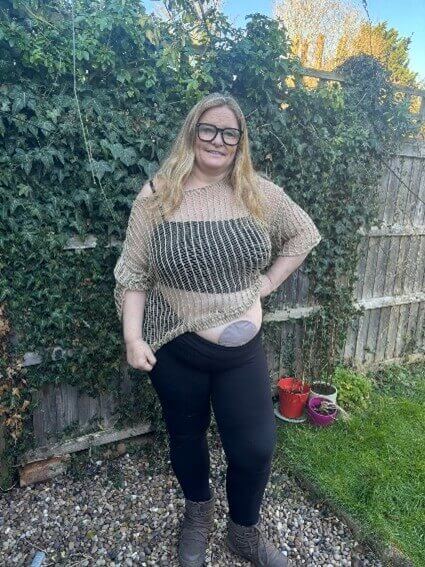
At first, it felt overwhelming. My body had changed, my independence had changed, and my confidence took a hit. Yes, I have a stoma bag. Yes, that means I have a disability. But over time, I realised something important: it doesn’t define who I am. I didn’t know what a stoma was and if I’d been told I needed one I would have said – no, I’d rather die than have it. But actually, it has changed my life. I no longer have the pains and sickness I had before. It turns out the nerves in my colon had not been working properly most of my life, but it hadn’t been picked up. The symptoms had always been put down to IBS. I had been in so much pain that I had to use Fentanyl patches, I was vomiting and couldn’t eat properly.
Before all of this, I lived cautiously
I worried about what people thought, pushed through discomfort, and assumed there would always be time to do the things I wanted to do “later”. Waking up in ICU stripped that mindset away. When you have to rebuild your body from nothing, you stop postponing life. You stop hiding. You stop letting fear decide what you can and can’t do.
Recovery became about choice as much as healing. I joined a gym and slowly built my strength back up, step by step. I had lost so much weight from being in ICU, so it took around a year to fully regain my strength. I challenged myself physically, but also mentally – including pushing myself to go to a spa for the first time since surgery. I was very self-conscious about my stoma bag at first, but standing there surrounded by people, I had a realisation that changed everything: nobody is completely happy with their body. Everyone carries insecurities. Once I accepted that, I stopped shrinking myself and just got on with living.
Life didn’t just return – it expanded.
I have a loving partner who understands my circumstances, supports me fully, and also encourages me to push beyond my comfort zone. She’s shown me that there truly is life after a stoma – and that stressing over the small stuff only limits what’s possible. Before my surgery I was veterinary nurse. I am now studying for a law degree and want to go into family law, and I think I can really make a positive impact on other people’s lives.
One of my biggest fears was flying with a stoma, especially long-haul travel. I was nervous about getting on a plane to visit my hometown in Cape Town, worried about my stoma, the bag, and how my body would cope during such a long flight. Twelve hours later, I arrived in the sunshine – and had one of the best trips of my life. I trekked up a mountain, took a helicopter ride, went on safari, visited spas, and enjoyed plenty of African braais. That trip wasn’t just a holiday; it was proof that fear no longer gets to make my decisions.
Preparation turned out to be the key: I organised my supplies carefully, kept drinks to hand, and made sure I didn’t wait too long to use the toilet. Long haul flights are more comfortable than short haul, and the toilets are better. I needn’t have worried about going through the airport either, it all went smoothly. I wore a sunflower lanyard so staff would know I might need extra help or consideration. When I went through the body scanner it picked up my stoma bag, but the security staff just swabbed it and didn’t make a big issue about it. I would say for anyone else travelling with a stoma for the first time to call the airline in advance and they will allow you to take extra luggage for your supplies. A few medicinal G&Ts can also help!
I’ve conquered some of my fears – not all of them – and that’s okay
Every day still brings challenges, both for me and for my family. But mentally and physically, I am not the same person I was before. The shift has been total.
Initially I had a colostomy, but it wasn’t working effectively, so two years later I had further surgery and now have an ileostomy. I have found this more challenging. I don’t have as much energy and must be careful what I eat to prevent blockages – a lot of fruit and vegetables don’t agree with me anymore. I need to empty my ileostomy bag 6-8 times a day, compared to changing my colostomy bag once a day.
Which brings me on to one of the things that annoys me the most the lack of stoma friendly toilets and people’s attitudes to accessible toilets! I find there still isn’t a lot of awareness about who might need to use them and why. You can find people using them with their kids, banging on the door telling you to hurry up because their child needs the loo or being left dirty, which isn’t pleasant to use. One time a guy challenged me and asked me why I needed to cut the queue. I’m never quite sure how to react in these situations, but I just told him I had a stoma and asked him if he wanted to see my bag. That shut him up!
I genuinely believe I was brought back from my coma to live my best life
I now live with curiosity, confidence, and plenty of adventure along the way. That belief is what led me to start Pouch Pals, a support group for people aged 18-50 living with stomas. I was approached by a stoma nurse to start a group for people around my age. Often stoma surgery in younger people is done as an emergency. I didn’t know about Colostomy UK when I had my surgery, and I had no one to turn to who understood what I was going through. If I can be there for even one person so they don’t feel the same that’s great. We’re still to have the first meeting of the group and I have set up a website and Facebook page and group. Shauna at CUK is helping me get things set up.
It’s going to be a space focused on acceptance, confidence, and moving forward – because life with a stoma isn’t the end of the story. Because none of us should feel alone in this journey. Because acceptance takes time. Because confidence grows when it’s shared. And because life with a stoma doesn’t have to be smaller — it can be bigger, braver, and more beautiful than we ever imagined.
Support From Colostomy UK
We offer a wide range of support for people living with a stoma, including our free Stoma Helpline, live chat support, and opportunities to connect with others through local and online groups. We also provide trusted information and resources to offer practical advice, reassurance, and the confidence to live well with a stoma: colostomyuk.org/support