

In Conversation: Colostomy UK’s CEO, Libby Herbert, and the Japanese Ostomy Association’s President, Mr. Jun Sakamoto
22 April, 2026
Libby:
How long have you been leading the JOA?
Mr. Sakamoto:
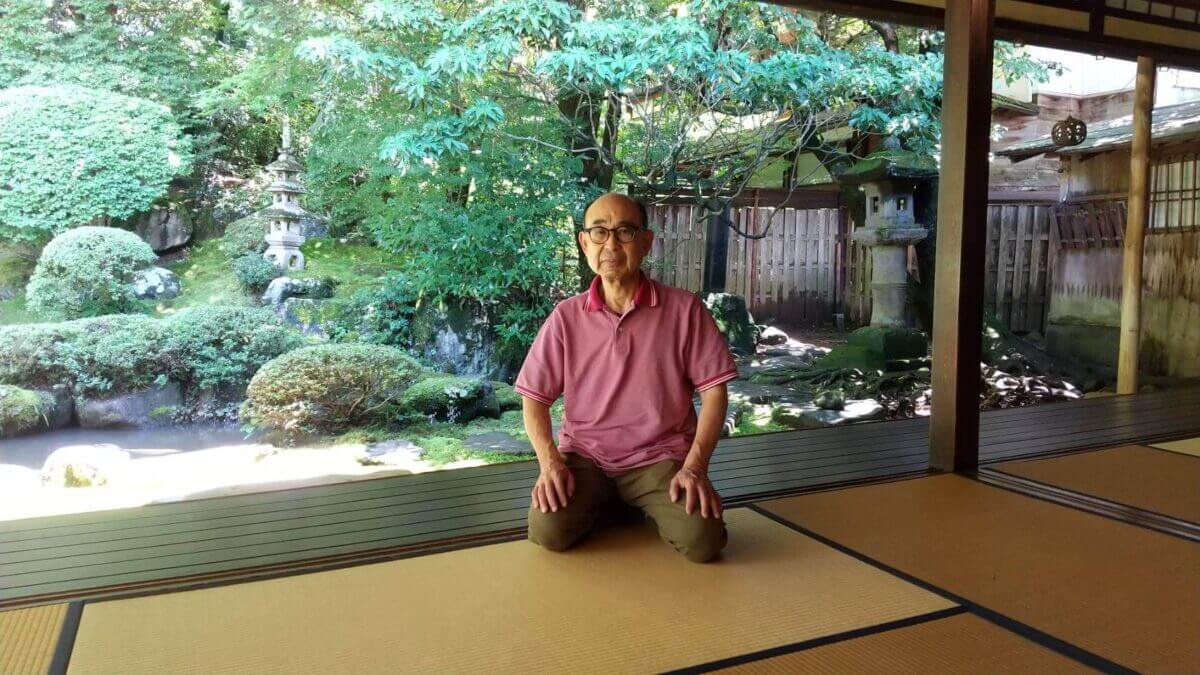
It has been six months since I took office in June 2025.
Libby:
What motivated you to first become involved with the Association, and then to lead it?
Mr. Sakamoto:
I had surgery for rectal cancer and had a stoma formed in June 2017. At that time, I searched online for patient support groups and found the Japan Ostomy Association. I joined the Kawasaki City branch in Kanagawa Prefecture. However, after attending my first branch event (a health seminar), I didn’t find it very engaging, so I stayed on the sidelines for a while.
About two years later, I accepted a role as a Branch Officer and eventually became Branch Manager. I felt that if members were spending their time and money to attend events, then those events needed to be worthwhile. I worked on planning more enjoyable activities, and participation began to increase.
Then, in early January 2025, the Representative Director/Vice President of JOA headquarters approached me to take on the role of President. I sensed the urgency of the situation and so I couldn’t refuse.
Libby:
How is the JOA structured as an organisation?
Mr. Sakamoto:
The JOA originally formed around patient groups in each prefecture (about 50 branches) and was recognised officially by the Japanese government in 2011. However, governance systems were not fully established at the time, and some of those challenges still exist today.
This is because funds held by each local branch should have been managed centrally. Instead, headquarters and branch funds continued to be managed separately. Strengthening governance and internal controls is essential if we want to provide stable support and improve the quality of life for ostomates across Japan.
I believe I was asked to take on the role partly because I have spent much of my career in finance.
Libby:
How many staff and/or volunteers work with JOA?
Mr. Sakamoto:
There are currently two part-time staff members at headquarters. It is difficult to grasp the exact number of volunteers across all the branches.
Libby:
What are the main activities of the JOA?
Mr. Sakamoto:
Our main activities are health seminars and consultation sessions held regularly by branches nationwide. These give ostomates and their families practical information to support quality of life and offer a ‘place to belong.’
Libby:
What would you say are the greatest challenges facing members of the stoma community in Japan today?
Mr. Sakamoto:
Although stoma-friendly restrooms (toilets) can now be found across the country, awareness of stomas remains quite low. This may be because stomas are a hidden disability, and because Japanese society often places greater importance on visible appearance.
Another challenge is that stoma care in Japan sits under the welfare system, rather than the medical system (as it does in the UK through the NHS). This means stoma subsidies are decided by local municipalities, creating major variation in funding resources depending on where someone lives. It’s a kind of ‘postcode lottery’.
Japan is also prone to natural disasters such as earthquakes. When such a crisis hits, supporting ostomates becomes even more difficult, because we must coordinate across many local authorities during chaotic circumstances.
To address this, the JOA is developing a national emergency response system that can be rolled out across all municipalities. This includes standard ostomy supply kits to be stored in municipal disaster relief warehouses and distributed quickly when needed.
Libby:
What do you consider the JOA’s greatest achievements?
Mr. Sakamoto:
Our greatest achievement is successfully lobbying national and local government to establish a subsidy system for stoma supplies and related products.
Libby:
What has been the most rewarding moment for you as President?
Mr. Sakamoto:
Before I became President, there was little proactive communication between the headquarters to our branches. As a result, branches did not know that headquarters had faced long-term financial difficulties and a serious shortage of funds.
So in October (2025), I visited every regional block across the country (each block includes around six branches), to share an honest update on the organisation’s situation and ask for future cooperation. The most rewarding moment was seeing members overcoming their initial reservations to begin working with the headquarters, and seeing members express a genuine desire to help stabilise the organisation.
Libby:
What are JOA’s priorities for the next five years?
Mr. Sakamoto:
My priority is to strengthen the organisation’s financial foundations and clarify our future vision. By communicating our work more actively, we hope to raise the JOA’s profile, increase membership, and ultimately improve quality of life for ostomates.
Libby:
How does public awareness of stomas in Japan compare to other countries?
Mr. Sakamoto:
We have not done many comparisons with other countries, so I cannot say for certain, but my sense is that awareness is low. As mentioned earlier, stoma care in Japan is treated as an “extension of daily living” within the welfare system, rather than as an ongoing public health issue.
In practice, this means that once someone has recovered from surgery, there is very little ongoing support unless they develop a medical issue such as a stoma-related infection.
Some ostomates who receive nursing care (for example, many older people) may qualify for Long-Term Care Insurance, which provides access to certain services. However, there is a gap for other ostomates.
Younger ostomates in particular, have very few places to turn for advice. I feel there is an urgent need to build stronger community-based support, especially for younger people.
Libby:
Are there any cultural attitudes or misconceptions about stomas that you are working to change?
Mr. Sakamoto:
Japanese society is premised on ‘vertical structures’ which creates clear divisions between community groups. For example, there can be a high wall between the concepts of ‘healthy/able-bodied’ and ‘disabled’. As soon as someone is seen as ‘disabled’, both sides may withdraw. Sometimes the person with the disability withdraws most. Therefore, simply explaining ‘what an ostomate is’ from the start doesn’t really move the conversation forward.
Instead, we should create attractive events that anyone can enjoy, bringing different people together. When people ask, “Who planned this event?”, they may then discover, “It was ostomates,” and that becomes a natural entry point for raising awareness. This was a perspective a young ostomate shared with me after I became President.