

When Early Intervention Matters: My Journey With a Parastomal Hernia
26 May, 2026

For Kev Harvey-Austen, in many respects life with a stoma has been an easier journey to navigate than life with his parastomal hernia.
When my stoma was formed in April 2016, it wasn’t after months of planning or gentle preparation. It happened on my very first hospital visit, after sixteen years of battling Crohn’s disease. One moment I was being assessed; the next, I was in emergency surgery.
I woke up with a stoma, a new reality, and a body that felt unfamiliar. Like many people in that situation, I focused on survival and recovery. I didn’t yet understand how vulnerable the area around a stoma can be, or how quickly complications can develop.
What I didn’t expect was that the next challenge would arrive almost immediately.
The Hernia That Appeared from Day One
Right after surgery, I noticed a lump forming around the stoma. At first, I assumed it was normal swelling. But then came the leaks – not occasional, but constant. The bag wouldn’t sit right, the seal wouldn’t hold, and I found myself changing appliances far more often than anyone had prepared me for.
When I raised concerns, I was told the hernia was “rare” and nothing to worry about. I was reassured that it would settle. No one mentioned support garments, risk factors, or early assessment. In the end, I identified the hernia myself through information available on the website of the medical clothing specialist, Comfizz, rather than through clinical guidance.
That early dismissal shaped everything that followed.
When a Hernia Starts Controlling Your Life
The hernia didn’t stay small. It grew quickly, and with it came more leaks, more discomfort, and more disruption. One day I had eight leaks – eight full changes, eight moments of frustration, eight reminders that something was wrong.
Some memories stay with you. One of mine is an air show day out with my daughter. A leak happened suddenly, painfully, and my skin began to bleed. What should have been a joyful family moment became a reminder that my body was struggling and that I was constantly one step away from embarrassment or pain.
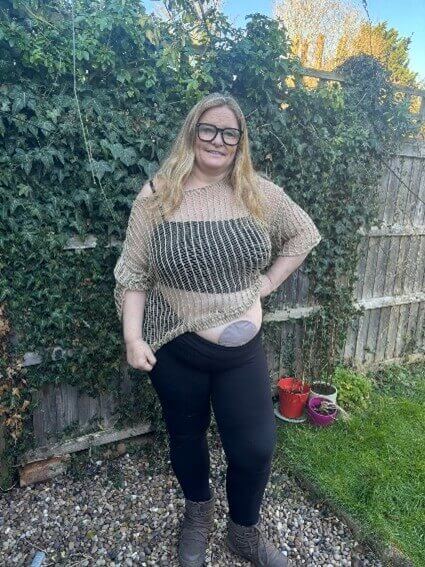
A hernia isn’t just a bulge. It affects how you walk, how you sit, how you sleep, how you dress, and how you plan your day. It affects your confidence, your independence, and your sense of control. It becomes a constant presence – one you didn’t choose and can’t ignore.
The Fight for Repair – and the Complications That Followed
When the hernia became impossible to manage, I pushed for repair. But this was during COVID, when elective surgeries were paused and resources were stretched. Keyhole surgery wasn’t available, and I found myself in a long cycle of waiting, asking, and being told “not yet.”
The medical decision to delay the repair wasn’t based on how the hernia affected my life – only on its size. But size isn’t the whole story. Activities, strain, and daily function matter too. I learned that the hard way.
At one point, after being repeatedly refused repair, I tried to strengthen my core with sit-ups. No one had warned me that sit-ups with a stoma and hernia combination can be dangerous. The hernia strangulated. Suddenly, the repair that had been considered “non-urgent” became unavoidable.
The surgery that followed was far more complex than it might have been if the hernia had been addressed early. Recovery took more than six months physically, and much longer mentally. The experience left scars that weren’t just on the surface.
The Emotional Weight That Isn’t Always Spoken About
Living with a hernia isn’t only a physical challenge. It affects your sense of identity, your confidence, and your relationships. In the early years, I struggled to understand my future purpose and worth. I felt like my body had betrayed me twice – first with Crohn’s, then with the hernia.
The strain didn’t stay contained to my health. It contributed to the breakdown of my 18-year marriage. Chronic illness doesn’t just test the person living with it; it tests the entire support system around them. When you’re dealing with pain, leaks, fear, and uncertainty, it becomes harder to show up emotionally in the ways you once did.
These are the parts of the story people don’t always talk about. But they matter. They’re real. And they’re part of why early intervention isn’t just a clinical issue – it’s a human one.
What I Wish I’d Known Sooner
Every ostomate’s experience is different, and nothing replaces personalised medical advice. But there are things I wish someone had told me in those early days – things that might have changed the path I ended up on.
- A lump right after surgery isn’t always “normal swelling.” If something feels off, push for assessment.
- Leaks may be a sign that something needs attention. They’re not just an inconvenience; they can indicate underlying issues.
- Support garments matter. Early fitting and proper guidance can help protect the abdominal wall.
- Sit-ups and similar exercises can be dangerous with a hernia. Safe movement guidance is essential.*
- Don’t accept “it’s not big enough” as the only measure for repair. Daily function, pain, and quality of life matter too.
- Advocacy is not being difficult. It’s protecting your long-term health.
- Mental recovery takes longer than physical recovery. And that’s okay.
A Message to Anyone Living with a Stoma or Hernia
If you’re newly adjusting to life with a stoma, awareness isn’t about fear – it’s about empowerment.
Understanding risks early can help you protect your future self.
If you’re already living with a hernia, know that you’re not alone. The frustration, the exhaustion, the emotional weight – they’re real, and they’re valid. Your experience matters, and your voice deserves to be heard.
And if you’re fighting for assessment, repair, or support, keep going. Your quality of life is worth advocating for.
Your body has carried you through more than most people will ever understand. That resilience is something to be proud of – not something to hide.
Advice on exercising safely with a stoma can be found Colostomy UK’s Exercise Information Page
Support From Colostomy UK
We offer a wide range of support for people living with a stoma, including our free Stoma Helpline, live chat support, and opportunities to connect with others through local and online groups. We also provide trusted information and resources to offer practical advice, reassurance, and the confidence to live well with a stoma: colostomyuk.org/support