

Call of Duty
22 April, 2026
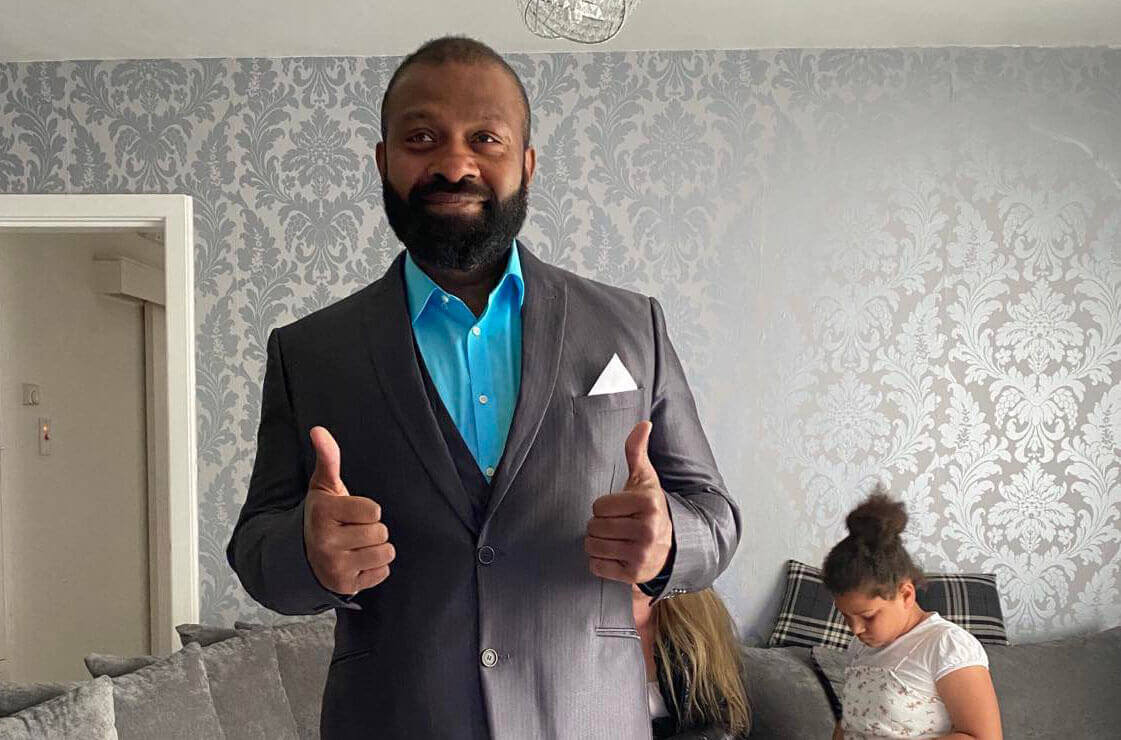
Napolioni Gaunavou swapped life in a paradise for active service in the British Army. That was until emergency stoma surgery changed the course of his life forever.
Pan out on a map of the world and cast your eye over the immense expanse that is the Pacific Ocean. Somewhere in its southern climes lies a sprawling mass of over three hundred tiny islands. This archipelago may be a mere speck in the vast body of water it inhabits, but the small nation of Fiji is famous the world over for being a tropical paradise. White sandy, palm-fringed beaches encircled by crystal clear waters and coral reefs.
Can anywhere truly live up to such an idyllic reputation? According to Napolioni Gaunavou, who was born and raised in the country, Fiji really does.
“Back home it’s constantly warm, so as long as you treat her right, Mother Earth always provides. We had everything. Food, laughter, fun. Unforgettable memories”.
Fiji may well be an earthly paradise, but economically, life on the islands can often be a challenge for the average Fijian. As a young man in the mid-2000s, Napolioni struggled to find secure, stable work, and finances were constantly tight. At 23 years old, and with a young wife and two small children to support, Napolioni felt he had little choice but to leave in search of “a better life, financially”, as he put it.
“I told my wife back then, ‘Look, I need to do something. We can’t be living like this.’”
As Fiji is a former British colony and now a member of the Commonwealth, the UK seemed a logical place for Napolioni to consider relocating to. It also happened that the British Army were actively recruiting new personnel from Fiji at the time. Some might find the prospect of serving in the armed forces daunting, but Napolioni was fulfilling a childhood dream.
“My personal passion was to be a pilot when I grew up. I remember seeing airplanes flying past and wondering what they must be like to fly”.

Securing a career abroad also held prestige amongst the local community, as Napolioni told me:
“It’s a major accomplishment. To travel somewhere else, to experience a totally new way of life, and then return to tell the stories and whatnot.”
And an accomplishment it certainly was, given that securing a post with the British military is no easy feat. With plenty of physical endurance tests, medical examinations, and the like, there were moments Napolioni doubted he would succeed.
Thankfully, by December 2007, he had passed all his tests and was formally enlisted into the Army, flying out to the UK that very same month. It was the first time Napolioni had ever left his tropical homeland. Needless to say, arriving in England in the midst of winter was a huge transition.
“To be honest, it was a total culture shock. Oh my goodness. It was freezing cold. It was snowing. I mean, for 23 years I grew up back home, and had never experienced snow. Everything was totally new”.
It wasn’t just the great British weather that Napolioni had to adjust to. Getting used to military life was also tough.
“Back home there were posters of people holding weapons and driving big tanks and all that. I hadn’t really thought about what’s going on behind the scenes – all of the intensive training. There were moments that I thought, ‘What am I doing here?’”
Yet he persevered, staying with the Army for over eight years. In that time, Napolioni parted ways with his first wife, but found love again while stationed in Germany. He remarried and had two more children.
In January 2015, now aged 31, he was sent on routine exercise in the Canadian prairies. On this occasion, it wasn’t Canada’s bitterly cold winter which was causing him discomfort, but rather his bladder. Napolioni was having to make frequent visits to the toilet but passing very little urine each time. Despite the problem persisting on and off for several weeks, he kept it to himself. As he told me:
“It didn’t occur to me that something was really wrong with my body”.
The issue continued to worsen, however. By now he was also waking frequently in the night to try and empty his bladder without success, and disrupting his much needed sleep pattern in the process. At last, Napolioni visited the camp’s medic. Why had he waited so long to get checked out? I wondered.
Napolioni felt that “In the Army, it’s frowned upon to be unwell. You have to be tough. If you say you are sick, people expect you to cope with it.”
The medic suggested that Napolioni continue the day as planned but on the proviso that he return for further examination if his condition worsened. He spent the day driving artillery tanks and a DROPS vehicle (a Demountable Rack Offload and Pickup System – in case you wondered). Napolioni endured constant bumps as the vehicles navigated Canada’s rough terrain, resulting in a pain in his lower abdomen. He soon dropped behind the convoy he was travelling with to try and alleviate himself once again, but with little success. A while later he stopped again. This time when he jumped out of the vehicle, he realised he could no longer feel his left leg from the hip down. He limped back to the medic’s vehicle, his foot and leg now also heavily swollen. The medic quickly jumped into action, recognising now that something must be seriously wrong. Having decided the issue must be a blocked bladder, the medic fitted Napolioni with a catheter.
“The urine just came gushing out” he recalls, “it was a massive, massive relief.”
A doctor later told Napolioni that, had he left his symptoms any longer, his bladder could have burst, making it unlikely he would have made it out of the Canadian prairies alive. Even so, he was still far from out of danger at this stage. Over the coming days he was transported first out of the exercise area to a medical unit, then flown back to the UK for tests at a specialist unit in Birmingham, where his wife and two daughters met him.
Test results showed that Napolioni had bowel cancer. The location of the tumour also meant that, as it grew, it increasingly pressed on his bladder, leading to the complications he’d been experiencing over recent weeks.
Anyone who has received a cancer diagnosis can relate to the worry and uncertainty which accompanies it. But for Napolioni, who had grown up in a country with limited healthcare, the word ‘cancer’ was particularly frightening.
“Back home, when you hear of someone having cancer… it’s a death sentence. I’ve been to the hospital in Fiji. It’s not up to standard, if I can say that. My wife and I cried. I told her it was all going to be okay. But deep down, I was scared to death”.
Napolioni started chemotherapy treatment immediately, followed a short time later by surgery to remove the tumour. He had been told that the operation would leave him with a permanent ileostomy, but knowing this in advance did little to reduce the shock he felt when he awoke after surgery to find his new stoma. As he explained:
“It was the first thing I checked when I gained consciousness. I pulled away my blanket and started feeling around it. I was like, ‘F***, S*** – this is a whole different life’”.
Napolioni was moved onto a ward dedicated to soldiers and veterans for his recovery. Over the coming days, his initial shock gave way to depression. As a soldier trained to respect strength and independence, Napolioni struggled to come to terms with his new stoma. Negative thoughts flooded his mind.
“How are people going to see me? How am I going to work and support my family?” Napolioni recalls asking himself.
“I was a soldier – constantly working and doing heavy duty things. Now I was someone poorly. My mental health took a hit massively.”
In these early days, Napolioni’s fears were so great that he seriously contemplated taking his own life. Thankfully, over time, his physical and mental health slowly both began to improve. This was partly owing to the decision to step back from his military career to give himself the best chance at full recovery.
Life continued to place hurdles in his path, however. Napolioni was required to have further chemotherapy following surgery, which again took its toll on his body. During this same period, he also had to prepare for and sit his British citizenship tests as he was no longer enlisted with the Army (while serving in the Forces guarantees Indefinite Leave to Remain, full citizenship is not granted automatically through military service). It was an exhausting and unpredictable time for him and his family.
Since leaving the Army and regaining his health, Napolioni has had several physically demanding jobs. Yet frequent leaks ultimately ruled out manual labour as a viable occupation. Today, Napolioni has a small clothing business with his wife, who is a keen seamstress. This enables him to work from home where he finds managing his stoma care easier. Has this helped him to feel more at ease with his stoma? I ask.
“I’m getting more comfortable with it now, because it’s a part of me. You know, it’s family”, he chuckles.
Speaking of family, I wonder if there are any plans to travel home to Fiji anytime soon. There are, Napolioni confirms enthusiastically – sometime later in the year.
“I need to reunite my children. My two children here, and my two children back home,” he explains, before adding reminiscently, “I really miss home. I just want to wake up to the peace and quiet of my village.”
Given the turbulent journey Napolioni has been on, a restorative trip back home to paradise seems well-earned indeed.