

Managing an Evolving Stoma Care Routine
22 April, 2026
Q&A with Jennifer M
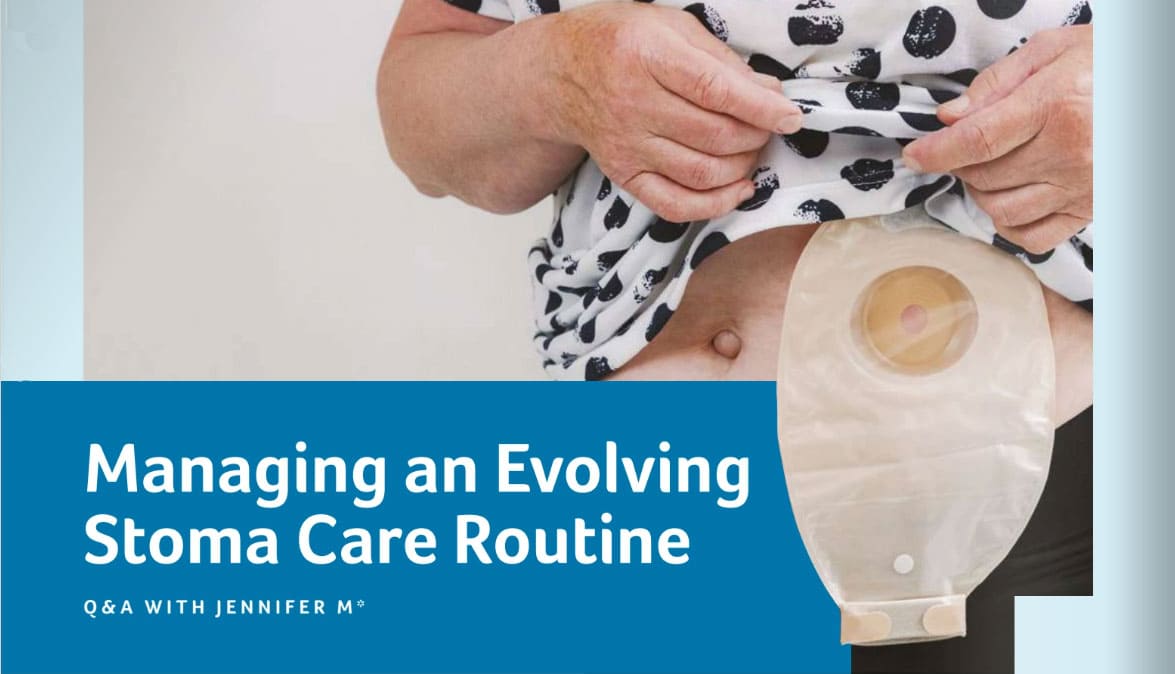
From confidence to clothing, pancaking to parastomal hernias, Jennifer has experienced many changes since having her stoma formed. Here she talks through the ways she has adapted to living with her stoma.
When and why did you have your ileostomy formed?
In 2017, following the discovery of colorectal cancer very low in the rectum. My surgeon hoped that a reversal or colostomy might be possible in the future. This came after an earlier breast cancer diagnosis, which had required surgery and radiotherapy some years before.
What were some of the initial challenges you faced with your stoma?
My reluctance to accept the stoma surprised me. After previous abdominal surgeries for three hernias following a hysterectomy, I had eventually returned to an almost ‘normal’ life. I knew a parastomal hernia was possible but hoped I might escape it.
Initially, I felt completely out of control. Three days after leaving intensive care I began managing the stoma myself, but I was mentally and physically exhausted. The acidity damaged my skin, the pain was significant, and the smell overwhelming. I felt helpless and couldn’t imagine coping at home.

How have your stoma care needs evolved over time?
I was given a hernia belt, but it was ineffective given my abdominal history, and by six months a parastomal hernia had developed. I noticed the stoma site changing shape and I experienced significant pancaking. Thankfully, I learned that sleeping upright with a V-pillow helped reduce this issue.
As the parastomal hernia gradually formed, so did the stoma site enlarge. This has meant adopting a regime to stay as safe and secure as possible to manage faecal output, while keeping an eye to manage any rectal discharge of mucus occurring intermittently.
I trialled numerous pouches and found that switching to a convex pouch, and getting up during the night, led to fewer leaks/disasters. It also meant that changing the pouch first thing in the morning was less of a hassle.
How has your diet evolved?
Before my stoma arrived, I was mostly vegetarian. My husband and I are avid gardeners and grow much of our own vegetables. Since surgery, my diet has become far more restricted. The ‘safe eating’ list I received at discharge removed much of the variety and pleasure I once enjoyed. I now have to avoid a wide variety of foods, and eating out requires careful planning.
Hospital advice suggested five small meals daily, emptying the pouch when a third full, and exercising regularly. However, I found this advice was hard to manage in practice. I would have welcomed a session with a dietitian and physiotherapist prior to discharge.
A limited diet hasn’t really brought health benefits to me as it has mostly reduced fibre, and raw foods. So weight loss hasn’t followed unfortunately. Cream, butter, honey, yoghurts and white bread are all still allowed…!
What’s been the greatest ‘breakthroughs’ with your stoma care?
Firstly, my experience of working with a dermatologist. When my peristomal skin became red, raw and bleeding, I couldn’t keep a pouch in place. Neither my GP nor nursing teams could offer a solution beyond trying different creams, which made matters worse.
I found a dermatologist specialising in parastomal skin who suggested the solution involved no creams at all. Instead, I cleaned the area daily, dried it carefully, then exposed the skin to the elements during a period when I could bank on minimal stoma activity – which required adjusting mealtimes. This routine worked incredibly well, and my skin soon recovered, although [RU3.1]I often have to repeat it when my skin degrades again.
The dermatologist also instructed me not to put any pressure on the abdomen. This led to my second breakthrough, as until then, I hadn’t realised my stoma belt was worsening the problem by compressing the stoma instead of supporting the hernia.
Since then, my quest has been to find effective parastomal hernia support (i.e. something to take the weight without restricting the stoma) to help improve mobility and reduce fatigue, which is becoming harder with age (I’m now in my late 70s).
What do you consider your greatest ongoing challenge with stoma care?
My hernia has been more disruptive than I expected, requiring daily pain relief. Positioned on my dominant right side following previous cancer treatment, the hernia has greatly affected the use of my right hand, limited my daily activities, and prevented me from playing my favourite hobby, bowls.
The hernia’s growth has also made finding a suitable convex pouch extremely difficult. I’ve had to build makeshift seals on flat baseplates, leading to frequent night-time leaks and wasted supplies.
Recently, however, my very kind local stoma nurses have sourced a flat pouch big enough for a large oval convex seal which I can cut to size. For the first time in years, I feel hopeful!
How has your experience of clothing evolved over time?
My body shape has changed significantly over the years, and swimming and seaside holidays feel like things of the past sadly. However, I now wear elasticated trousers and bright, patterned tops. Lively colours cheer me up and put a smile on people’s faces as well, which also gives me a lift. For me, dressing brightly isn’t about being noticed – it is all about my feeling more confident in myself.
So how have your stoma-related issues affected your confidence?
I no longer trust my body, particularly with unpredictable rectal discharge. It often leaves me feeling helpless and grotty, as well as causing discomfort at the entrance of my anus, which then impacts on what I can do and where I can go.
That said, the “poo taboo” is slowly lifting, especially as more young people are going public about their stomas.
What advice would you give to others on their own stoma journeys?
Don’t feel you’re alone. A stoma is nothing to be ashamed of. Show your determination to make things better. Stay in contact with your stoma nurses and keep asking questions.
Finding a support group is very important too if you, your family or friends, want to better understand your situation.
Finally, always remember that our stomas keep us alive and (most of the time), it is a very good thing!!!!