

Peta Barratt story
13 August, 2026
By Ross Othen-Reeves
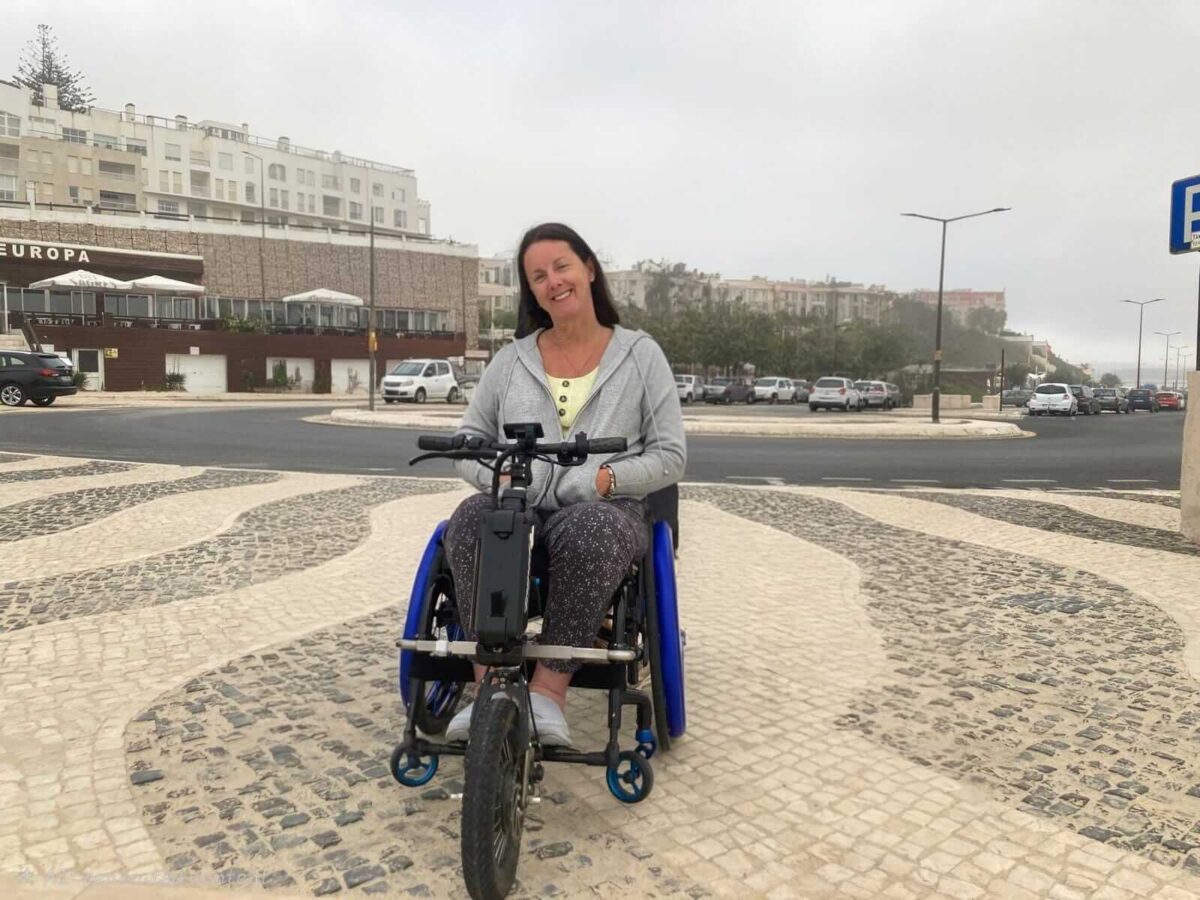
Peta Barratt is Support Co-Ordinator at Colostomy UK. Having been with the charity for about a year, we felt it was high time we shared her astonishing story with our Tidings readership.
‘Ever since I was little, all I wanted was to be a ballet teacher’, Peta tells me without hesitation early on in our conversation. It might sound like a typical childhood fantasy, but Peta’s hard work and dedication ensured her dream became reality. At 18, she enrolled in a degree at a specialist dance college. Three years later, with her teaching qualifications now in the bag, she entered the professional world of dancing in style.
Her first job took her to Hong Kong, where she lived and worked for a year. She then relocated to Europe where she taught in southern Italy and which, she assured me, was every bit as fabulous as it sounds.
On returning to the UK in the late ‘80s, Peta began working at a renowned dance academy in the village of Stoke Poges, Buckinghamshire. In 1991, she bought the school from its retiring founder. Peta rebranded the academy, giving it its current title, Ondine, in homage to a beloved ballet of the same name, written for the celebrated ballerina, Margot Fonteyn.
Peta owned and managed the school for thirty years. Under her stewardship, Ondine expanded its intake to some 400 pupils, taught at numerous sites all across Buckinghamshire. During this meteoric rise through her career, Peta also found time to marry her now husband, Kavon, and raise their twins, Ben and Tara.
Then, on an otherwise unremarkable weekend in 2016, everything changed.
Peta was in her loft making space for a large new water tank that she and Kavon were having fitted. Engrossed in the task, she had sailed through the morning and lunchtime without any food or water. Perhaps light-headed, or a touch dehydrated, Peta looked at her watch and realised she was due a break.
This was the last thing she remembers of the moment.
Seconds later, she fell out of the loft hatch, colliding with the banister as she continued to fall down the stairs to the ground floor of the family home. She landed on the hallway floor, almost at Kavon’s feet (he having raced to the hallway on realising something awful had happened).

Despite having no recollection of the accident itself, Peta has memories of lying at the foot of the stairs, as she recalled:
‘I couldn’t move my legs. I didn’t really understand why. It was quite a bizarre moment. I was thinking: “Why can’t you move your legs?”’
Peta was rushed to hospital in an ambulance where she underwent emergency surgery. She had severed her spinal cord at the tenth vertebrae upon impact with the banister and was told she would never walk again.
It was life shattering news, as Peta explained:
‘I’ve cried enough tears to fill up an entire river. I’ve been through every emotion possible. I’ve always been quite a strong, independent, and active person. Everything that I stood for was taken away. The only thing that wasn’t taken away – thank the Lord – was my husband. I’ve been so lucky to have him in my life. He’s been amazing.’
Despite the extraordinarily tough journey Peta has been on, her gratitude also extends to her physical health:
‘To be honest with you, I was lucky. Really lucky that I only severed my spinal cord. I could have broken my neck, or I could be dead.’
By sheer coincidence, the UK’s National Spinal Injuries Centre (NSIC) is based in Stoke Mandeville hospital, within driving distance of Peta and Kavon’s home. As the UK’s leading provider of specialist spinal cord injury treatment, the NSIC is also the birthplace of the international Paralympic Games, originally known as the Stoke Mandeville Games.
Peta spent 11 weeks rehabilitating at the centre.
Yet even in the immediate aftermath of the accident, Peta’s mind was on her beloved school, Ondine. The accident had occurred on the Saturday and yet by the following Monday, she had called her secretary to her hospital bedside to make new arrangements for the school in her absence.
‘But I was so dedicated to that school,’ she explained. ‘Ondine was my baby and I needed to look after her.’
The accident occurred during the school holidays, meaning that in total, Peta only missed half a term before getting back to work at the academy. But from her very first lesson back, she realised teaching would never be the same again.
‘It was a senior class that I went to teach, and so they’d all known me since they were small children. I came in, in my wheelchair, and they just didn’t know how to be with me. And I didn’t know how to be with them, because I wasn’t comfortable in my own skin, I was so self-conscious. Afterwards I just cried. It was awful.’
Peta stepped back from teaching and focused instead on administrative tasks – a role she continued for several years, but which left her feeling out of touch with the wider school community. She no longer had contact with the children or their parents, and so the joy and drive she once felt for Ondine began to fade.
Then, one day, Peta had what she can only describe as an epiphany:
‘I just woke up one day, and life just completely changed. I needed to get rid of all the old things to be able to move on and create a new life’.
This included Ondine.
‘Ondine was the biggest thing in my life, so when I finally sold it, I was euphoric, because it was clinging onto an old life. It was such a weight off my shoulders. I told myself “This is who you are now, and we’re going to open a new book”.’
With Ondine now sold, Peta began to focus on volunteering opportunities. This included Macmillan Cancer Support and the Spinal Injuries Association.
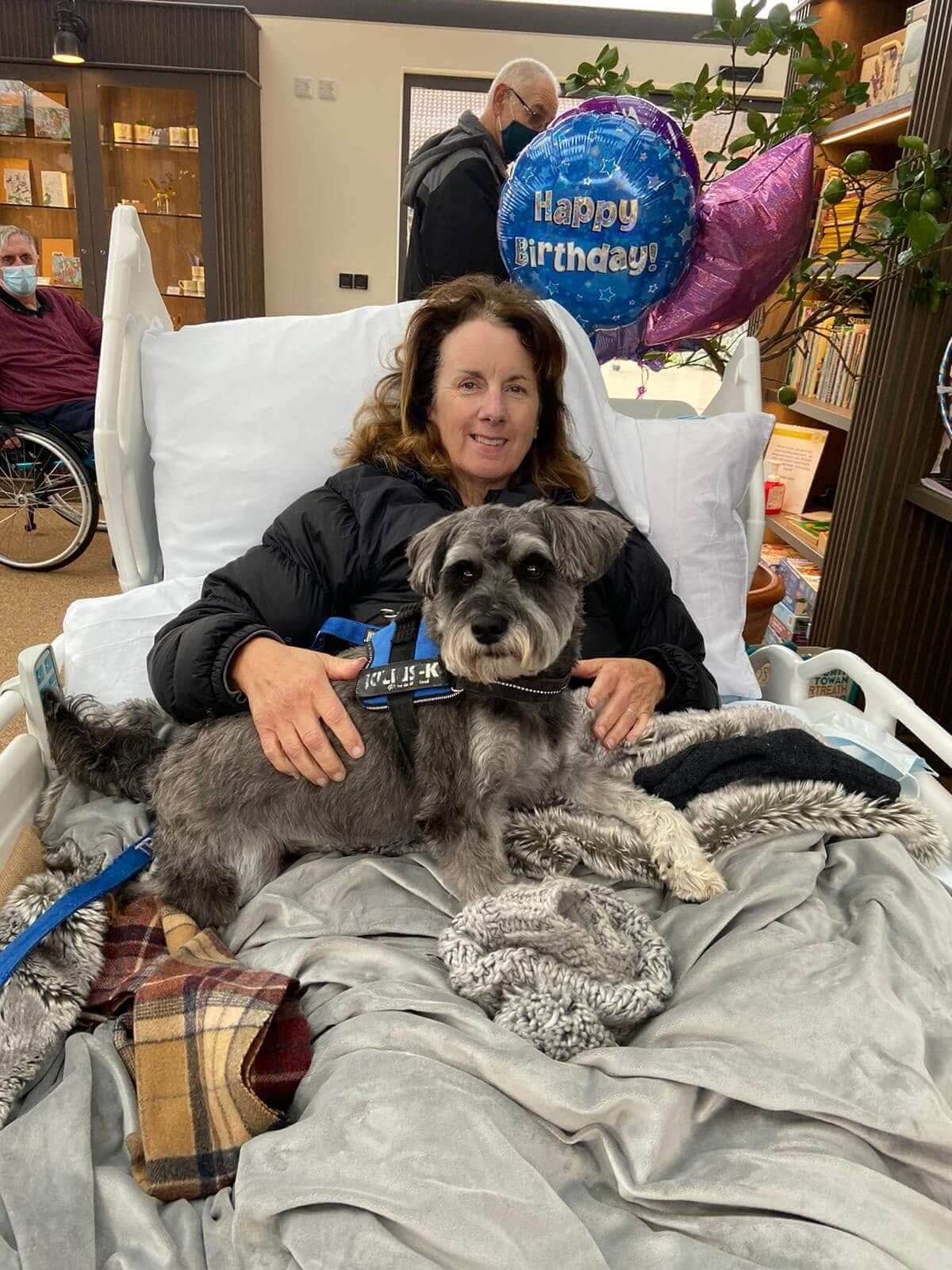
For a time, it seemed Peta was finally able to settle into her new life.
This was until one evening, around six years on from the initial accident.
Peta found herself suffering from neuropathic pain in her hips. A sleepless night and awful day followed. By 4pm, with Peta’s temperature reaching over 40 degrees, Kavon called for an ambulance.
Peta was rushed into emergency surgery once more.
While on the operating table, her heart stopped and her lungs collapsed. She was put into an induced coma for five days and subsequently spent eight weeks recovering in hospital. She had also woken to discover she was now living with a permanent stoma.
It transpired that Peta had been dangerously ill with sepsis due to having ruptured her bowel.
Being paralysed from the waist down, Peta no longer had control over her bowel and bladder functions. She had to perform colonic irrigation every other day.
Reflecting on this, Peta said:
‘The professional opinion is that, because I couldn’t feel where the catheter went, I pushed it up too far and ruptured my bowel. But I didn’t know that I’d done anything wrong at the time.’
She believes all spinal injured people should be offered stoma surgery as an option over irrigation.
As she told me bluntly:
‘Irrigation was an absolute pain in the arse – if you can excuse the pun.’
Without the ability to push, Peta simply had to sit on the toilet after flushing her bowel, waiting for gravity to do its thing.
‘My colostomy is great. I love it. It’s not time consuming, it just does its thing and then you take care of it. So from a management point of view, it’s fantastic.’
Living with a stoma may have made Peta’s daily routines more manageable, but it wasn’t something that she gave much attention to in her everyday life.
That changed through her volunteering role for the Spinal Injuries Association, where she met Colostomy UK’s CEO, Libby Herbert, through an aviation disability forum.
The two hit it off immediately and met regularly over the coming months. During this time, Peta became increasingly aware of her identity as someone living with a stoma.
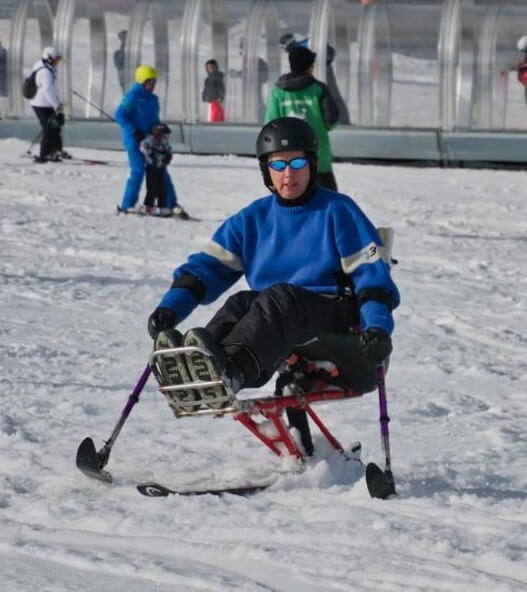
So, when a job opportunity opened up at Colostomy UK a few months later, she didn’t hesitate to apply.
She became Support Co-Ordinator, taking calls on Colostomy UK’s helpline and supporting people living with stomas across the UK.
Being back in paid employment gave Peta a renewed sense of freedom and independence.
‘I love volunteering. Absolutely love it. But as part of my strong will to be as independent as possible, I hated not having my own money, and I was desperate to get a job. I felt that at 60, I still have so much to offer.’
What she hadn’t expected was just how much the role would mean to her.
‘When I started talking to people [on the helpline] I realised just how grateful people were to talk to me, because I have a stoma, and so I understand what they’re saying. You can almost hear them breathe a sigh of relief that they’ll be talking to somebody who’s actually got one. It feels so privileged. It’s amazing. I never thought about that side of things before I started, but I love it. I think that’s probably my favourite bit of the job.’
Asked how working at Colostomy UK compares with her career in professional dance, Peta responds with the same certainty she once had as a child dreaming of becoming a ballet teacher.
‘I enjoyed my job when I had my career, but this is something completely different. I have never enjoyed working as much as I enjoy working now. This was the missing piece in my jigsaw to a completely new life.’
Support From Colostomy UK
We offer a wide range of support for people living with a stoma, including our free Stoma Helpline, live chat support, and opportunities to connect with others through local and online groups. We also provide trusted information and resources to offer practical advice, reassurance, and the confidence to live well with a stoma: colostomyuk.org/support