

The Superpowers of Miss Lillie and Her Mum Emma
26 May, 2026
How Lillie Dodd and her mum Emma face rare disease, double stomas, and daily care with humour, grit, and a smile that inspires thousands.
Every superhero has an origin story
Lillie Dodd loves superheroes, and her favourite is Spider-Man. It makes sense. Like Lillie, Spider-Man is funny, brave, and quietly determined, even when things get hard. And he did not get his powers because life was easy. He got them after something unexpected changed everything.
Lillie’s “origin story” began before she was even born. She has a genetic anomaly, a duplication on chromosome 19, so rare that she is the only person in the UK registered with it. Her condition does not even have a name. Instead, it is written as a long line of letters and numbers: 19q12,30,765,107–31,823,229×3. It means little to most of us, but it shapes every part of Lillie’s life.
Chromosome 19 plays a key role in smooth muscle function, particularly in the bowel and bladder. Alongside this rare duplication, Lillie also lives with type 1 diabetes, autism, learning disabilities, speech delay, and anxiety. Together, these conditions require constant management and specialist care.
Emma, Lillie’s mum and full-time carer, has her own superhero backstory. She cares not only for Lillie, but also for her husband Phil, who has a degenerative spinal condition. Her days are filled with hospital appointments, medication routines, alarms, forms, and phone calls, the kind of vigilance that can make every week feel relentless.
Ask Emma what her superpower is and she will say it is persistence.
“The ones who speak loudest and most often get heard.”
She has learned to chase appointments, follow up test results, and question delays because if she does not, things get missed. Tests do not happen. Appointments drift, and support slips through the cracks. Incredibly, she remains polite throughout, something anyone who has navigated the healthcare system will recognise requires superhero strength.
When people say, “I don’t know how you do it,” Emma answers simply:
“I do it because I don’t have a choice.”
She does not see herself as heroic. She gently challenges the idea that coping is a virtue, pointing out that it masks exhaustion and the weight of navigating systems that make caring far harder than it needs to be. She uses superhero strength daily, but in a better system, she would not have to.
Meet the stomas: Dave and Wendy
When I first met Lillie and Emma over Zoom, I shared my own stoma story, waking up after emergency surgery to find a bag I had not expected, and how reading others’ experiences helped me feel less alone. Lillie listened carefully, then shared joyfully:
“My stomas are called Dave and Wendy!”
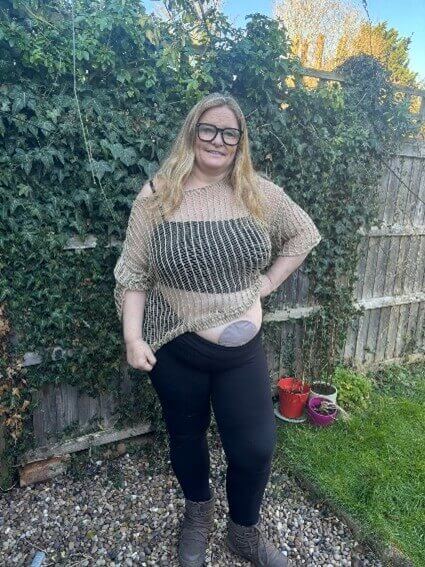
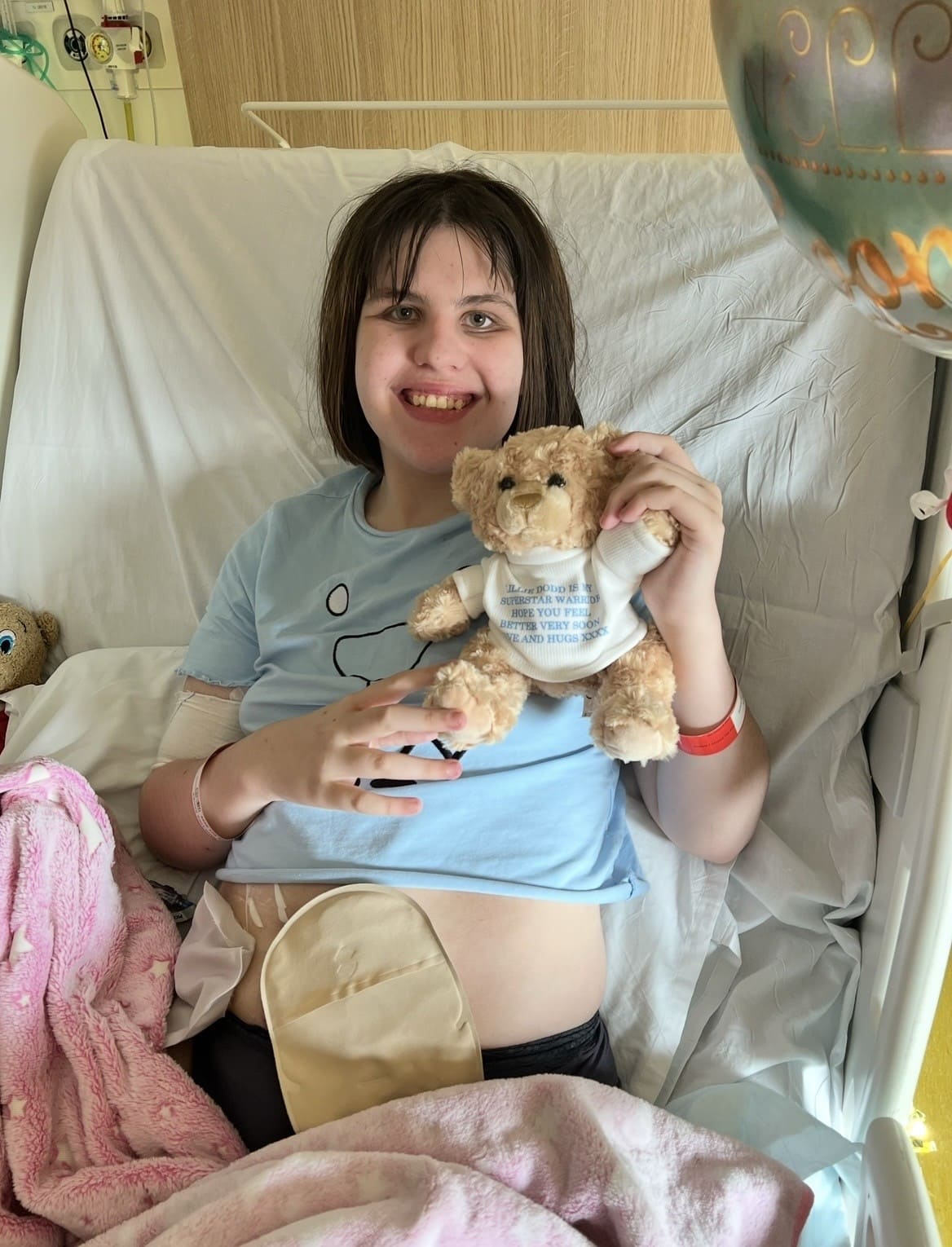
Lillie has two stomas. Her colostomy is Dave. Her urostomy is Wendy, or, as she cheerfully calls her, “Wee Wendy.”
When I asked whether naming stomas was important, Lillie said yes, “because it’s fun.” Naming turns something clinical into something personal. When Dave is “naughty,” it is because “he’s a boy and boys are naughty.” Wendy behaves better because she is a girl. This humour transforms something overwhelming into something she can laugh about.
Lillie’s advice to anyone facing stoma surgery is direct:
“Be brave.”
She said it is hard to explain bravery in words. Sometimes it is simply accepting what is happening and taking care of the next thing.
Dave’s beginning – when “managed” doesn’t mean “fixed”
Dave was formed in December 2020, just before Christmas and in the middle of the COVID pandemic. Lillie had lived for years with severe chronic constipation. Medications and procedures were tried, but eventually the family reached what Emma calls “the end of the line.”
A stoma does not always “fix” a problem. Sometimes it helps manage something that cannot be fixed. For Lillie, the colostomy allowed bowel output to move, bringing an essential improvement in quality of life.
But “managed” does not mean easy.
Over time, new issues emerged. Lillie began passing large amounts of mucus rectally. In August 2025, she underwent major surgery to remove her rectum. She spent two weeks in hospital, this time in adult care, with Emma by her side.
Dave remains unpredictable. Over the past year, Lillie has experienced what the family call “explosions,” sudden, dramatic emptying often preceded by severe cramps. Afterwards, the pain eases, but during it the experience can be painful, frightening, and exhausting.
These episodes also affect Lillie’s diabetes. When her bowel rushes, her blood sugars can drop rapidly, requiring close monitoring and intervention. Managing interacting conditions creates a unique fatigue because the issue is never just one thing.
Wendy’s rescue – no more tubes down the leg
If Dave’s story is complicated, Wendy’s is, in many ways, a success.
For years, Lillie lived with a neuropathic bladder. Treatments escalated from medication to Botox injections and finally to a suprapubic catheter. For seven years she underwent general anaesthetic every twelve weeks for catheter changes. Eventually she needed a leg bag on constant free flow, uncomfortable and visible.
Then came repeated blockages. The catheter clogged with mucus and tissue. Emma flushed it several times a day. School staff did the same. When it fully blocked, Lillie was rushed to hospital for painful emergency treatment.
“There was no quality of life,” Emma says.
In January 2022, surgeons created Wendy through an ileal conduit urinary diversion. The operation lasted seven and a half hours and was followed by serious complications: ileus, severe vomiting, electrolyte collapse, seizures, and time in HDU. Emma lived through this alone due to COVID restrictions and still describes it as traumatic. Lillie thankfully remembers little of it.
Today, Wendy is “very well behaved.” Lillie can empty her bag herself, giving her independence and, when asked how she feels about this, she says:
“Better! No more tube. I can wear whatever I want.”
The comfort, dignity, and freedom Wendy has brought are a huge relief and a small victory in the number of battles Lillie and her mum face every day.
The smile that inspires a community
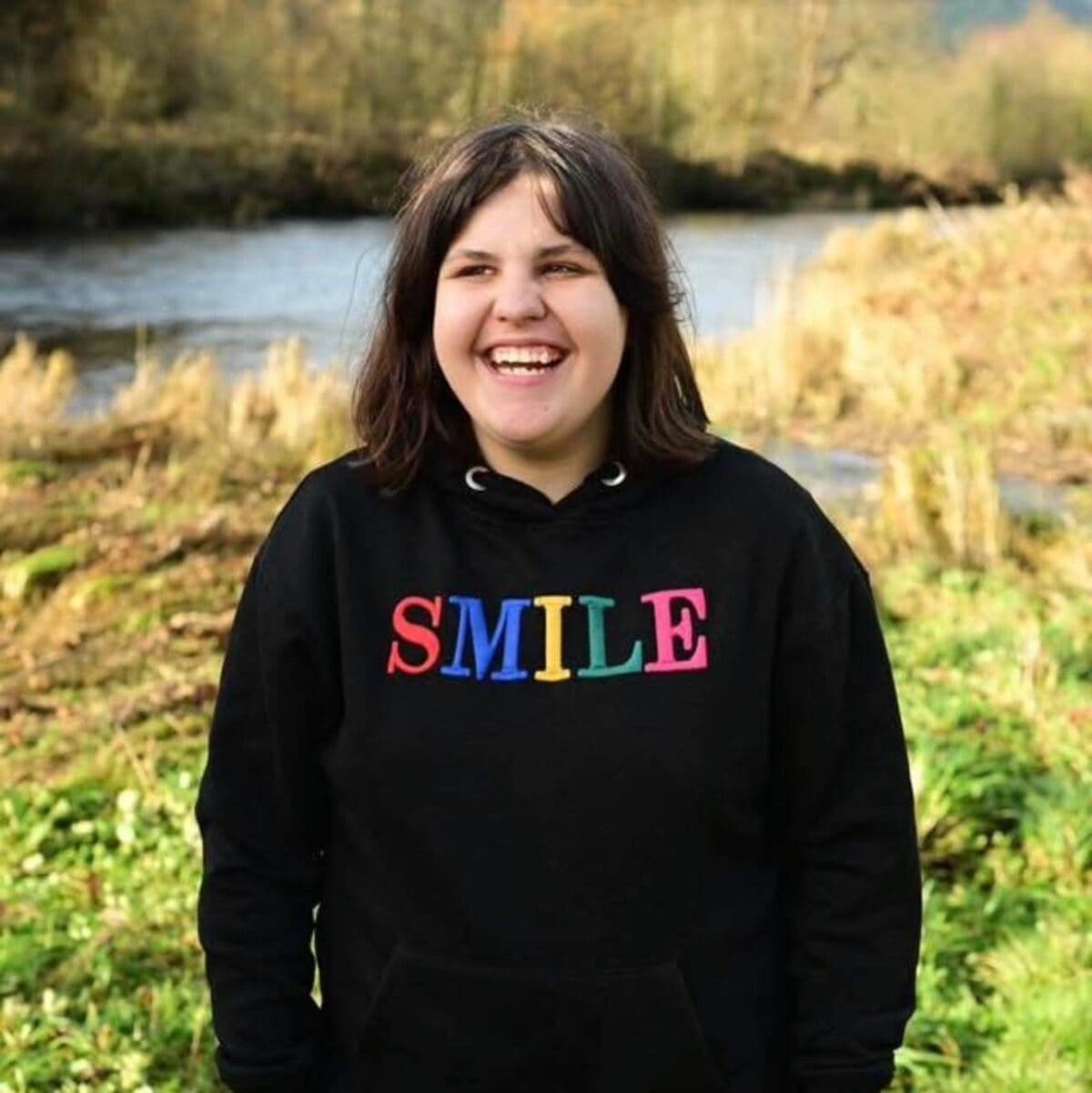
Another one of Lillie’s superpowers is her infectious smile.
Her Facebook page, Miss Lillie’s Journey, has more than 6,400 followers, her “fans.” Emma shares hospital updates alongside everyday moments: dogs, café trips, boredom, bravery, and life in between. On Rare Disease Day she described Lillie as “Rare, unique, inspirational,” before returning to what defines her:
“Yet that famous Lillie SMILE shines through.”
The support goes both ways. Living with a rare condition can be isolating, but online Lillie and Emma have created a space where others feel understood. Lillie sometimes shares openly when she is in pain or exhausted, a reminder that being inspirational does not mean pretending to be fine.
Love, friendship and everyday joy
Lillie’s life is not only hospitals and care plans. She has a boyfriend, Steven, and they have been together for seven years. Steven also has additional needs, so when they go to cafés or the cinema, Emma is always nearby to support them both.
Many people with stomas fear they will not be loved. Lillie’s story challenges that. Her stomas are part of her life, not the end of it. Steven makes a point of asking after Dave and Wendy, something Lillie clearly appreciates.
One of the highlights of Lillie’s life came in 2019 when she was granted a Make-A-Wish trip to Disney World in Florida for her 15th birthday. The family stayed at Give Kids The World Village, and everywhere Lillie went she wore her special lanyard as a “wish child.” Mickey Mouse was, and still is, her absolute favourite. Years later, she still talks about Mickey with the same excitement.
She also loves music, from Olly Murs to Mr Tumble, sensory lights, Roblox, Disney films, and animals, especially giraffes. She has two dogs: Rufus, a gentle black lab who comforts her when she is unwell, and Lola, a springer spaniel who bounces through life waiting to play.
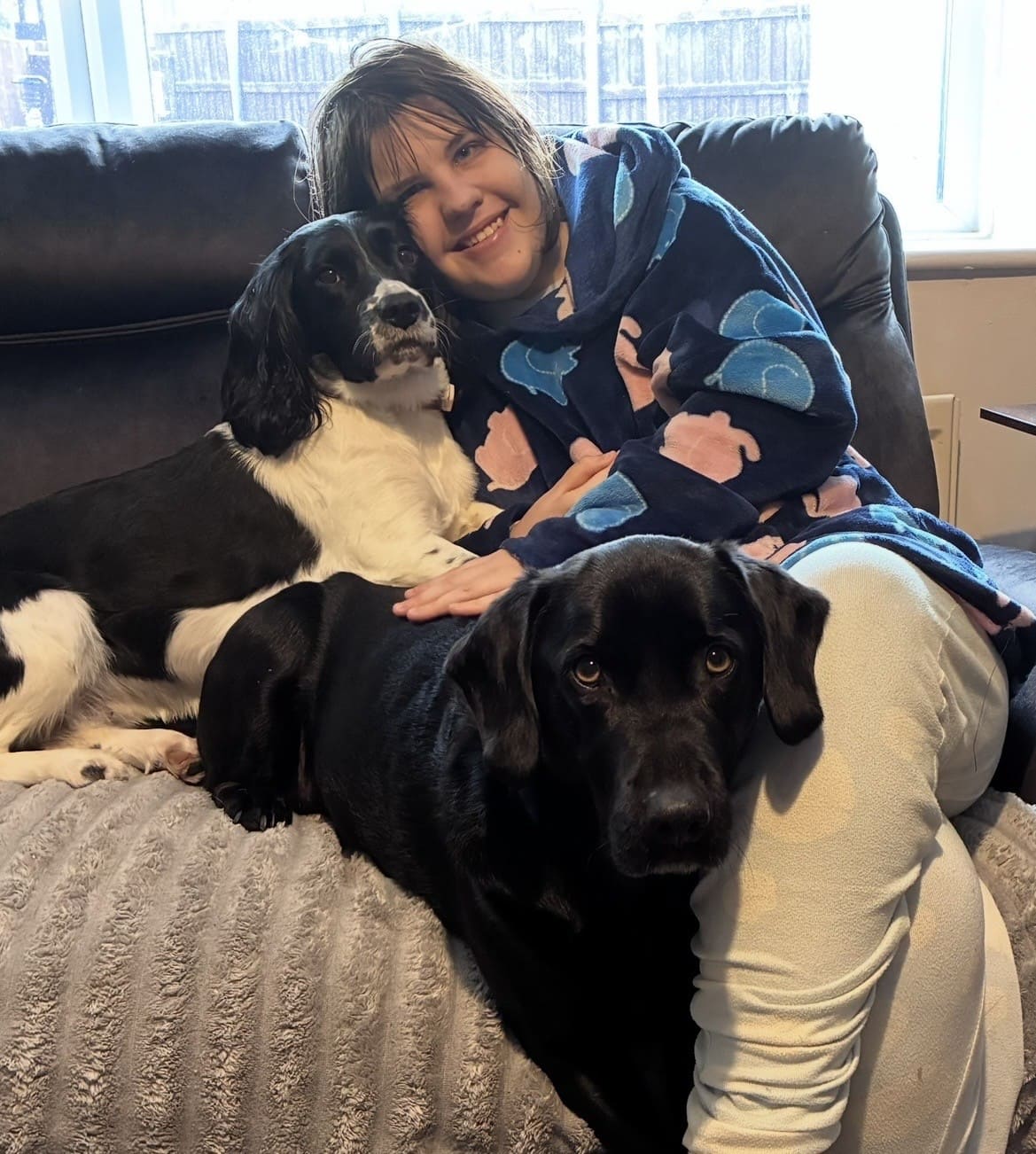
Family: the close-knit safety net
Behind every superhero is a team, and Lillie’s is close-knit and devoted. Her dad Phil is a steady presence, even with his own health challenges. Her older brother Michael treats her exactly as any big brother should: winding her up, teasing her, and making her feel like an ordinary little sister.
Hannah, Lillie’s big sister, is “my safety net,” Emma says. If Emma is too unwell, or stretched thin by her other caring responsibilities, Hannah steps in without question. She is deeply involved in Lillie’s care and is always willing to be part of the support team. Emma calls it “girl power in the truest sense.”
“No matter what happens to me,” Emma says, “I know Hannah will make sure Lillie is cared for.”
That certainty, the knowledge that Lillie will never be without someone who loves her and knows how to help her, is one of the most reassuring facts in Emma’s life.
Now Hannah has exciting news of her own: she is expecting a baby boy and moving close by. Lillie is thrilled to be an auntie soon. The next generation is arriving, and the family’s circle of love is only growing wider.
Support From Colostomy UK
We offer a wide range of support for people living with a stoma, including our free Stoma Helpline, live chat support, and opportunities to connect with others through local and online groups. We also provide trusted information and resources to offer practical advice, reassurance, and the confidence to live well with a stoma: colostomyuk.org/support