

A Legal Alien in Tokyo
01 March, 2026
Written by Ross Othen-Reeves
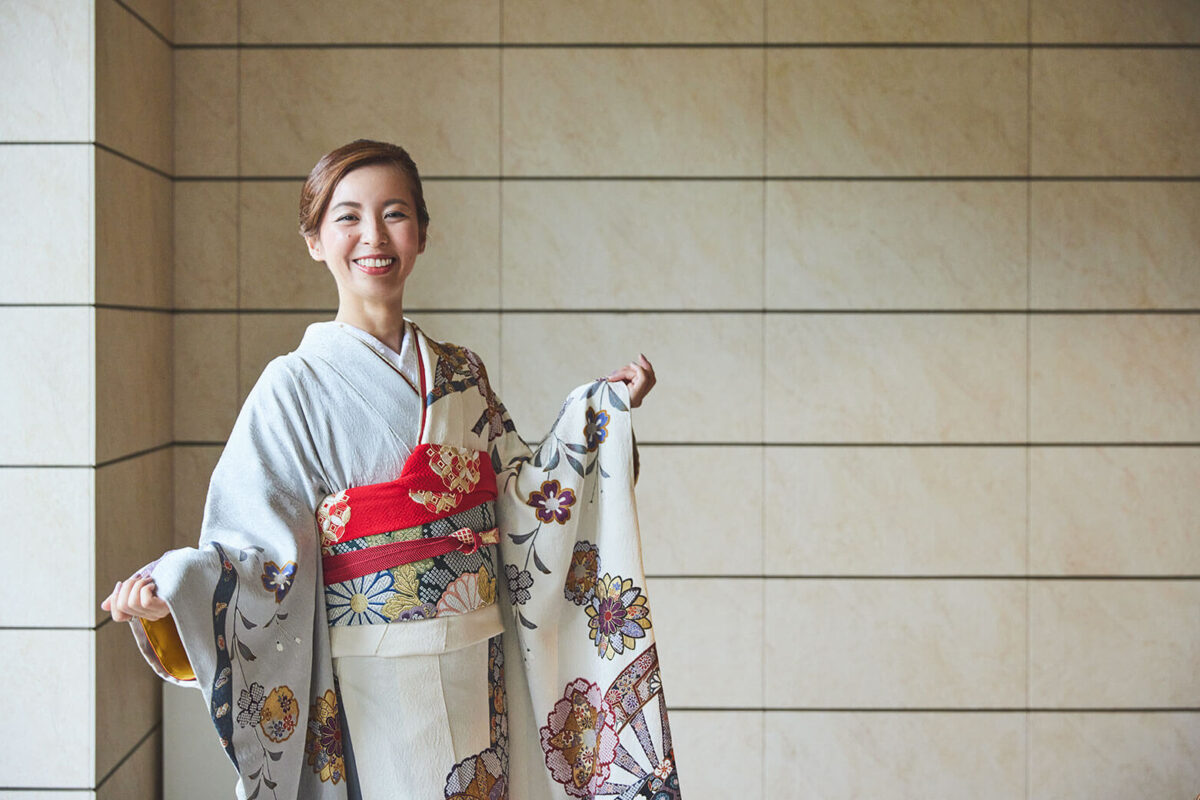
Yuri is Japanese, but she studied in Boston, Massachusetts, where she mastered both English and the East Coast dialect. Her gift for languages has grown into a freelance career coaching singers in English pronunciation, translating music textbooks, and interpreting music lectures, masterclasses, and interviews for international jazz vocalists and brass players – all from her hometown of Tokyo. It sounds like a wonderfully theatrical role, perfectly suited to her big, quirky personality.
I first glimpse her playful and unique outlook when I ask how she feels about living with a stoma.
“It’s like an alien came to live in my tummy!”
She says this wide-eyed and half-convinced, as though the idea might genuinely be true.
“Like this weird creature just came to live in me, uninvited. I don’t mind him. He’s not really any trouble, but sometimes he is a pain in the neck. He doesn’t listen to me. He just does his own thing!”
Yuri has been cohabiting with her ‘alien’, on and off, since 2016, when she was diagnosed with bowel endometriosis – a condition where tissue similar to the uterine lining grows elsewhere in the body, including the intestines. The severity of her condition led to part of her colon being removed and a temporary colostomy being formed.
A reversal surgery later that year was successful – but only briefly. Soon after, Yuri developed a rectovaginal fistula (RVF), an abnormal tunnel connecting the large intestine to the vagina, leading, as she delicately puts it, to faeces “coming out of the place where it shouldn’t.”
Doctors offered her two options. The first was a complex, high-risk operation.
“I could have this big, acrobatic surgery to stop the fistula. It sounded shocking and painful. The procedure only has a 50/50 success rate too, so it might have meant even more surgeries afterwards to make it stable.”
The alternative? Return to life with a stoma.
For Yuri, it was a no-brainer.
She chose to have a stoma formed again – a decision made easier by the unwavering support of her husband, Shuhei. In fact, he was more comfortable with her first stoma than she was.
“We were newlywed when we found out about my endometriosis and I had to have stoma surgery. I was devastated, because I wasn’t sure if he would still love me. But I was more shocked by my stoma than he was.”
Part of Shuhei’s perspective was shaped by how serious Yuri’s initial surgery had been. What was expected to be a six-hour operation lasted over 12 hours due to severe adhesions between her digestive and gynaecological systems.
“Shuhei and my family were waiting for me. During that prolonged period, he became increasingly fearful of losing me. I think in that tense moment, he realised he would accept any version of me rather than not have me at all.”
Ten Years On
A decade later, Yuri is still living with her ‘temporary’ stoma – and she has no plans to reverse it.
A supportive partner helps. But so does something else.
Since childhood – long before developing endometriosis -Yuri had struggled with severe constipation and painful haemorrhoids.
“I feel more comfortable living with a stoma. I was having so many bowel problems. Having a stoma has drastically made my life easier, more comfortable, and more controllable.”
She pauses, then adds candidly:
“I would rather have a stoma bag than an uncontrollable, natural anus. I’m sorry – I don’t know how to sugarcoat those words!”
We both burst into laughter. There’s no need for sugarcoating here.
Her pain is gone. Life is unquestionably better with a stoma than without. But like many ostomates, she still deals with leaks, ballooning, and moments of body image doubt. And living in Japan adds its own complexities.
Living With a Stoma in Japan
On one hand, Japan is one of the most supportive countries in the world for ostomates.
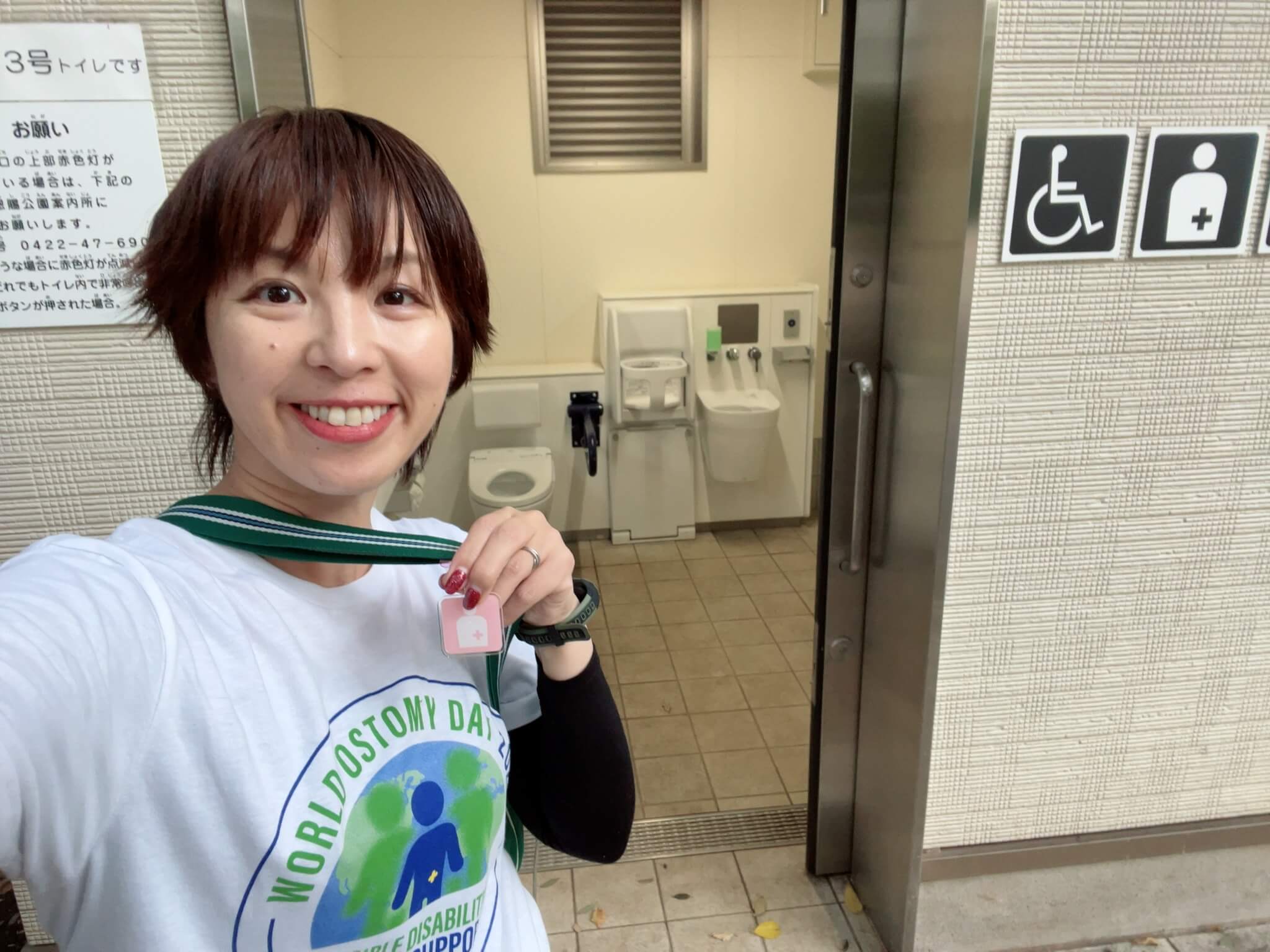
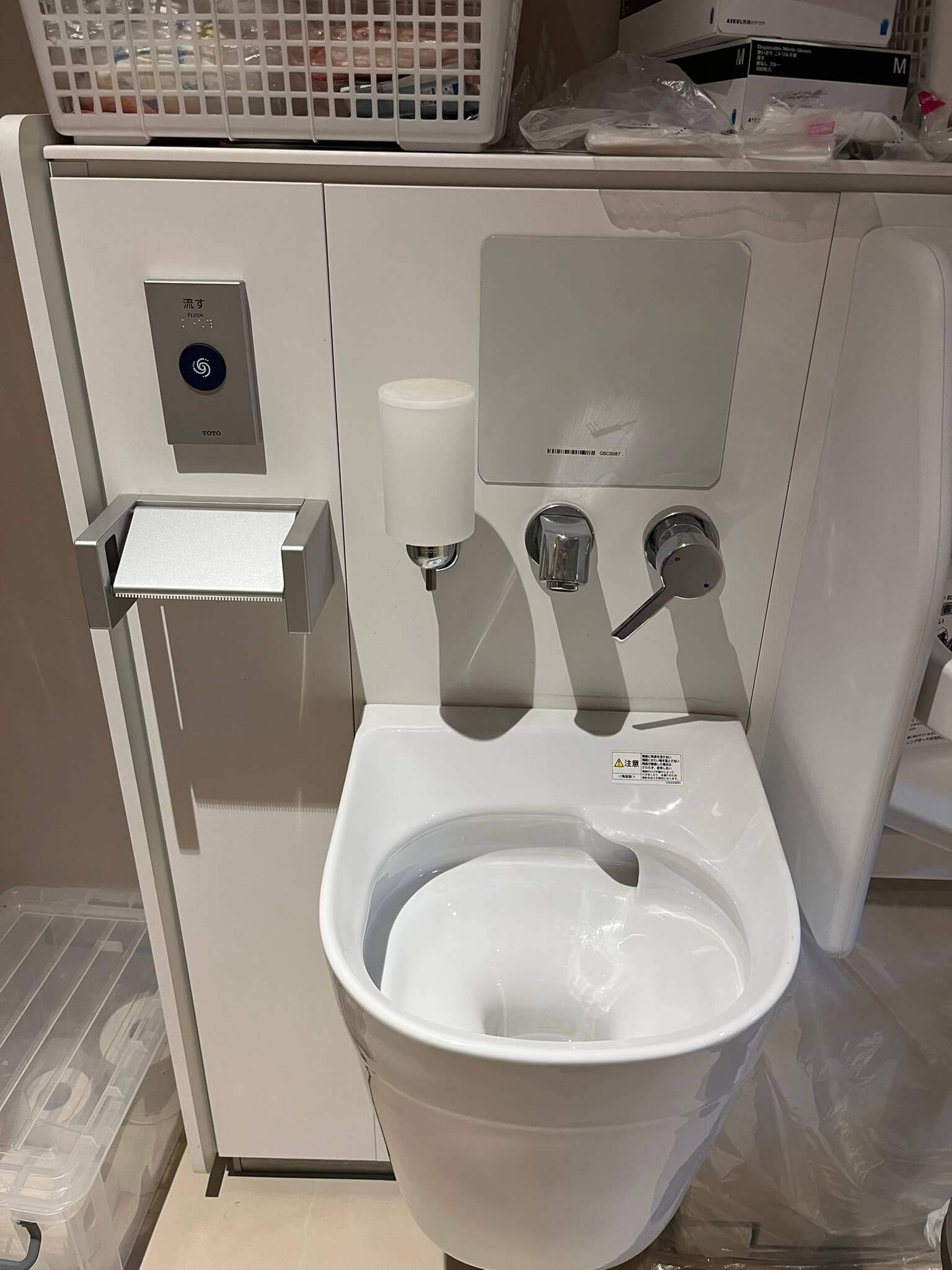
The health insurance system functions similarly to the UK’s NHS, with local governments distributing monthly budgets to cover the cost of stoma supplies. Accessible toilets include sinks specifically designed for stoma care. There is even a dedicated stoma icon to signal hidden disability in public spaces.
On paper, the infrastructure is impressive.
But socially, Yuri says there is still work to do.
“We install all these fantastic systems, but people aren’t catching up with it. So, it’s a nice country to live in as an ostomate, but we still need to do much more to teach people what stomas are.”
There is another challenge unique to Japan: language.
“In Japan, the word ‘stoma’ is literally translated as ‘artificial anus’ – which is really horrendous.”
Within the community, foreign loanwords are often used instead. Ostomates may refer to themselves using a Japanese pronunciation of “ostomate,” and the word “stoma” itself is used among those familiar with it. But outside that circle, she often has to explain the literal translation – reinforcing discomfort and stigma.
Yuri believes language plays a powerful role in perpetuating silence and shame.
From Patient to Advocate
Advocacy was never part of her life plan.
It began unexpectedly when a friend -a doctor – was surprised to learn Yuri was an ostomate. That conversation led to an interview for a medical magazine. The response was overwhelming. Readers reached out to say it had helped them understand stomas better.
That was all the encouragement she needed.
Yuri launched her own website, sharing honest reflections about life with a stoma. She also created a workshop called Diversity in Digestion. Using donated outdated stoma bags and handmade visual aids, she explains how and why stomas are formed, helping to demystify a topic many are too embarrassed to discuss.
The workshops became so popular that she now runs them in both Japanese and English for Tokyo’s international community.
In 2021, she joined the Japan Ostomy Association (JOA), a national organisation supporting ostomates for over 50 years. Working closely with its president, Jun Sakamoto, Yuri has been exploring innovative ways to engage younger ostomates while continuing to serve the organisation’s long-standing members.
Her energy seems limitless.
Over the past year, she has also been attending Colostomy UK’s online Active Ostomate Pilates classes, reading Tidings, and collaborating internationally with fellow advocates. Her mission is clear:
“I want my fellow ostomates to have proper self-esteem and to thrive in life.”
The Alien That Changed Everything
Living with a stoma was never part of Yuri’s plan.
But advocating for the rights, visibility, and wellbeing of ostomates has become central to who she is. It is hard not to wonder who she might be today had that mischievous little “alien” not arrived uninvited all those years ago.
Sometimes the most unexpected guests reshape our lives in the most profound ways.
Support From Colostomy UK
We offer a wide range of support for people living with a colostomy, including our free Stoma Helpline, live chat support, and opportunities to connect with others through local and online groups. We also provide trusted information and resources to offer practical advice, reassurance, and the confidence to live well with a stoma: colostomyuk.org/support