

The Impossible Race: Tom Plater and the Cocodona-250
13 August, 2026
By Megan Lowden (Fundraising Executive)
In a shake up to our usual Fundraising format, we’re focusing on just one particular individual, Tom Plater, who has kindly raised funds for Colostomy UK. Not content with a regular challenge, Tom flew out to America to take in the Cocodona-250 – a brutal 253-mile ultramarathon in Arizona. Here he talks Megan through this incredible experience.
Please share a little about yourself
My name is Thomas (Tom) Plater. I’m 40 years old and live in Windsor with my wife and our two children. I previously served for nine years in the British Army before moving into construction project management.
I’ve always enjoyed pushing myself physically. But since my cancer diagnosis, endurance running has become much more than a hobby – it has become a way of rebuilding myself after some significant health challenges.
Talk us through your stoma journey
I currently have a permanent ileostomy, which was formed following emergency surgery in 2024, although this isn’t my first experience of living with a stoma.
In 2019, shortly after losing a close friend to bowel cancer, my wife persuaded me to speak to my GP about symptoms I’d been ignoring for over a year. That decision almost certainly saved my life. I was diagnosed with bowel cancer caused by an inherited genetic condition.
In September 2019 I underwent surgery to remove my colon, create a temporary ileostomy and form a j-pouch. Unfortunately, my j-pouch never functioned as hoped. Over the next four years my health gradually deteriorated until it failed catastrophically in July 2024. I was rushed into emergency surgery and woke up with what I knew was likely to be a permanent ileostomy.
Looking back, that operation didn’t just save my life for a second time – it became the starting point for a completely different outlook on recovery, and on life itself.
How has having a stoma shaped your life?
The biggest change has been my attitude.
When I had my first temporary stoma in 2019, I saw it as something to endure as quickly as possible. I didn’t really engage with the support available because I was focused entirely on getting rid of it and returning to my old life. I now realise that approach was a mistake.
When I woke up from emergency surgery in 2024, I decided I was going to approach recovery differently. I accepted that this wasn’t something to hide, but something I needed to learn to live well with. Becoming more open about my experience has helped me far more than trying to deal with it privately.
Living with a stoma has also introduced me to the incredible work of charities such as Colostomy UK. Seeing my two-year-old nephew also begin life with an ileostomy reinforced just how important that support is and made me want to help challenge some of the misconceptions people have about living with a stoma.
What drew you to running an ultra-marathon?
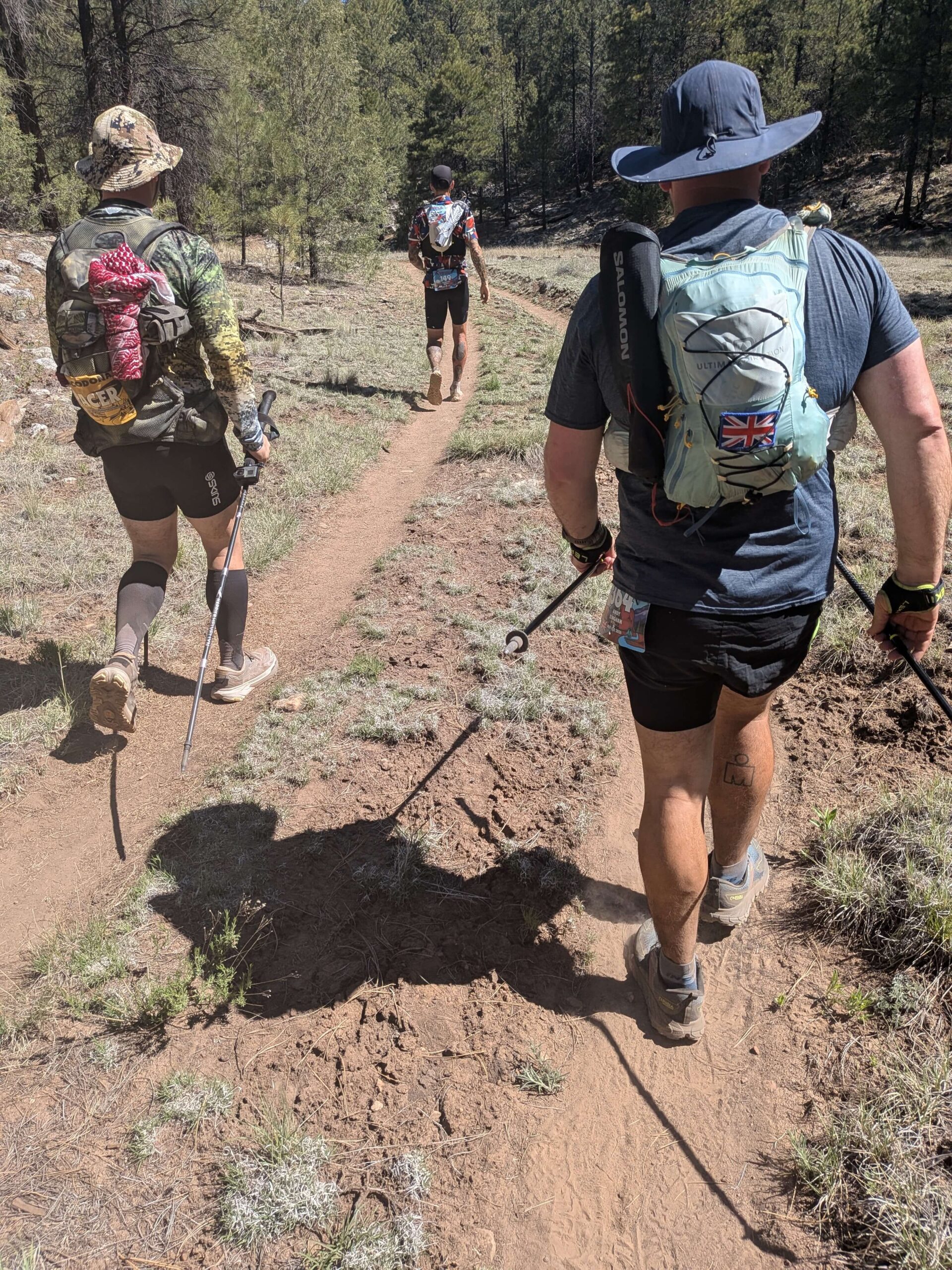
I’ve always enjoyed endurance sport. During my military career I learned to enjoy operating in physically and mentally demanding environments, and after leaving the Army, I found endurance events filled that gap.
Following my emergency surgery in 2024, a close friend and fellow Army veteran attempted the Cocodona-250 in Arizona. I’d followed the race for several years, fascinated by what many regard as one of the world’s toughest ultramarathons, but had never imagined I would one day stand on the start line myself.
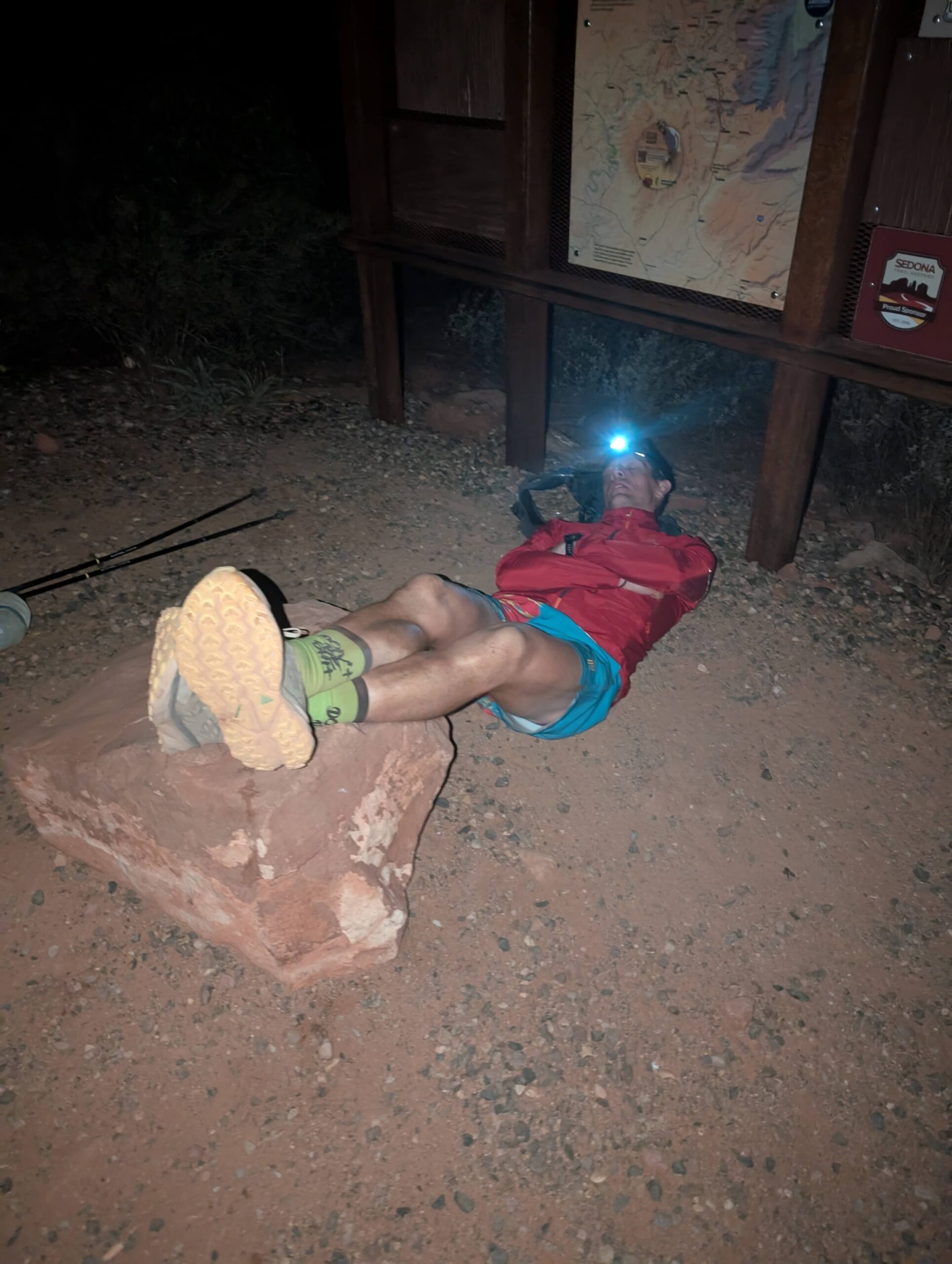
Cocodona isn’t simply a 250-mile race. It crosses the Arizona desert before climbing into mountains and forests, covering more than 35,000 feet of elevation over five days. Runners experience extreme heat during the day, freezing temperatures at night, very little sleep and long periods of complete self-reliance. The race has a reputation for breaking even the most experienced ultrarunners, with around 30% unable to finish.
That complexity and hostility became part of the attraction. I needed something that seemed almost impossible, because if I could rebuild myself to complete Cocodona after surgery and while living with a permanent stoma, it would completely redefine what I believed was possible.
The race became much more than a sporting challenge. It gave me a reason to rebuild, to structure my recovery, and to prove to myself that life with a permanent stoma didn’t have to limit what I was capable of achieving.
What preparations did you have to make?
Training for Cocodona had two equally important parts.
The first was preparing physically. Over the course of a year, I built my endurance through structured training, strength work, hill running, long hours on an inclined treadmill and stepper while carrying weight and even using saunas to help prepare for the heat I would experience in Arizona.
The second part was preparing to manage my ileostomy over five days of continuous running. I tested different bags, adhesives, skin preparation products, clothing systems, and running packs. I deliberately tested equipment during long training runs and in hot conditions to understand its limits. I also had to carefully plan hydration, nutrition, spare equipment, and the support my crew would provide.
By the time I stood on the start line, I wasn’t worried about whether I could cover the distance physically. My biggest concern had always been managing everything that came with running such a race while living with a stoma.
How did the race itself go?
Cocodona-250 is unlike most endurance events. It isn’t split into stages with overnight stops. Once the race begins, the clock never stops. Whether you sleep, eat or keep moving is entirely your own decision.
Aid stations are positioned roughly every 12 miles, stocked with food, drinks and medical support, although the opening 30-mile section provides only limited water because of the inaccessible terrain. Many runners sleep at aid stations or on the trail, but having a dedicated crew and support vehicle makes an enormous difference.
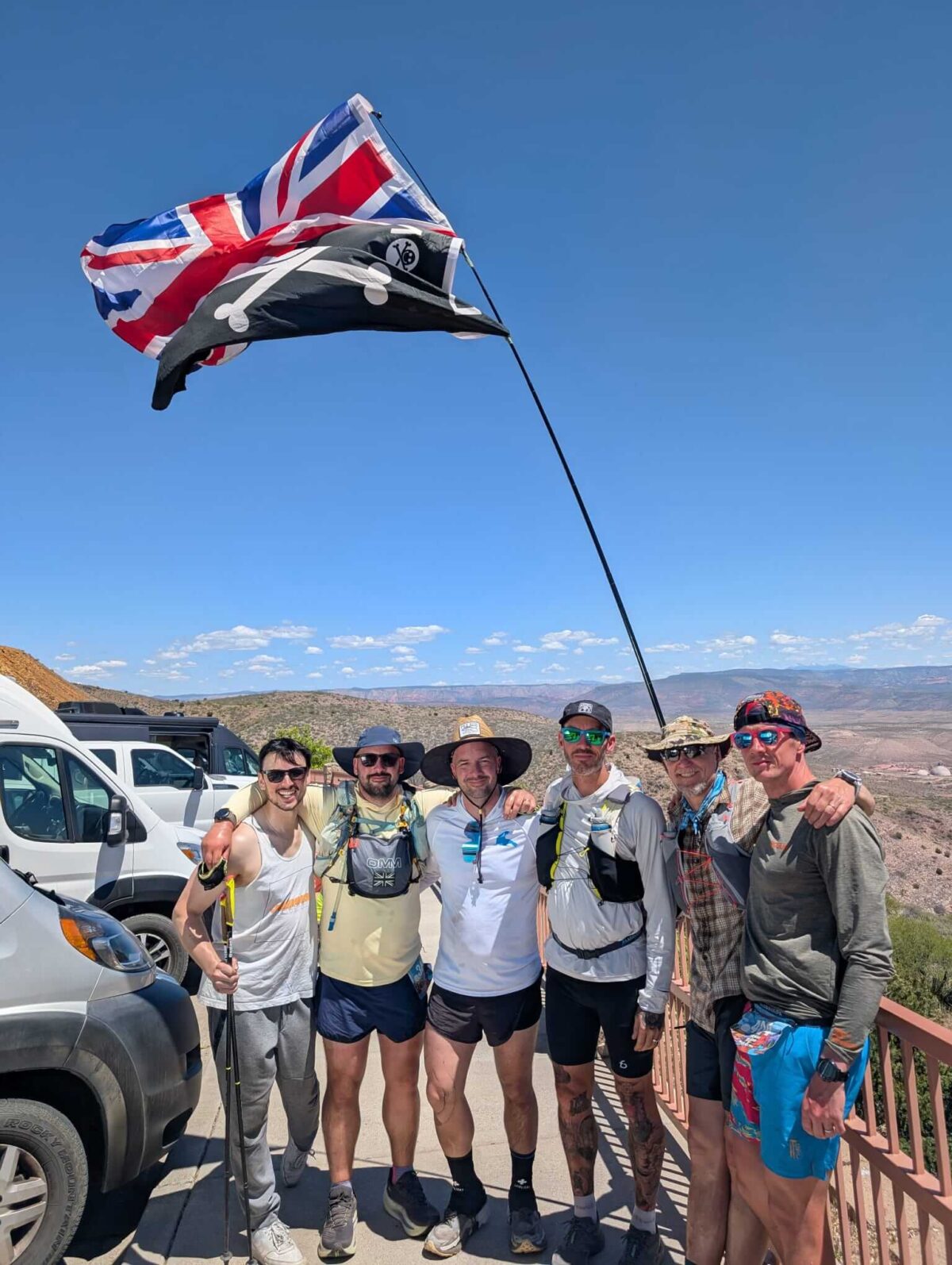
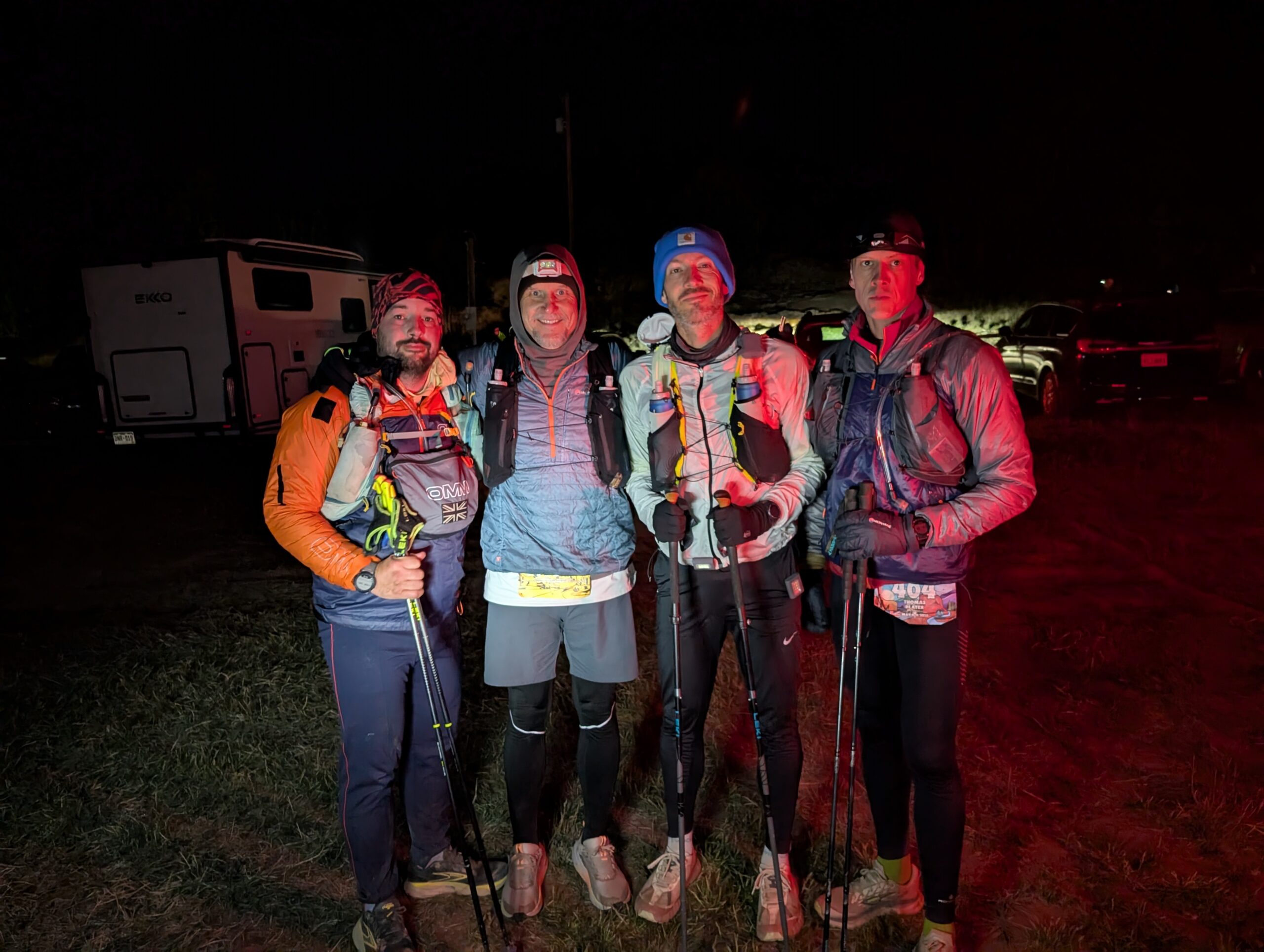
I was fortunate to be part of a close-knit team made up of three runners, two pacers and an additional crew member, led by Crew Chief, Steve. Two I knew from my military career, three had attempted Cocodona in 2024 and only one, Scott, had completed it. Their experience, encouragement and organisation were invaluable throughout the event.
Months of preparation meant my stoma caused far fewer problems than I had feared, although not everything went to plan.
Halfway through the race, because of time pressure and exhaustion, I skipped what should have been a routine bag change before setting out on day three. About ten miles later, while climbing the iconic Hangover Trail, I realised the bag was beginning to peel away from my skin.
Initially, I wasn’t too concerned. I thought I could make a quick change, catch my teammates and reach the next aid station. Instead, I discovered that the spare bags I’d been carrying had been stored for too long and had lost much of their adhesion.
Suddenly the situation became far more serious.
I faced a choice: turn back almost ten miles to the previous aid station and almost certainly abandon the race, or patch the problem together as best I could and hope it held until the next checkpoint.
There was only one option.
I improvised, caught my teammates, apologised for disappearing and eventually reached the next aid station, where I could make a proper change. Physically I was still moving forward, but mentally it was the closest I came to believing my race was over.
Looking back, that experience reinforced the importance of preparation but also of remaining calm when things inevitably don’t go according to plan.
The most memorable moment, however, wasn’t an individual section of trail or a spectacular view. It was crossing the finish line alongside the two teammates I’d started with five days earlier. That moment as a team felt incredibly special.
People often ask what the highlights were. But nothing truly captures what Cocodona feels like. It’s one of those experiences that has to be lived to be understood.
Why did you choose to run the race in support of Colostomy UK?
Originally I hadn’t intended to fundraise. Cocodona was a personal challenge and a way of rebuilding after emergency surgery.
However, as more people learned what I was attempting, they wanted to support the journey. But it soon became obvious that I had an opportunity to raise awareness and funds for two charities that had become personally important to me.
Colostomy UK provides support for people living with a stoma and their families. Seeing both my own experience and that of my young nephew reinforced just how valuable organisations like this are. If sharing my story helps make life even slightly easier for people like my nephew, then being open about my own experiences is worthwhile.
I also chose to support REORG, a charity that had previously funded my gym membership during my recovery from surgery. As an Armed Forces veteran, their support played an important role in helping me rebuild both physically and mentally.
Together, the fundraising has raised more than £5,000 before Gift Aid.
Is there anything else you’d like to share?
If I could offer one piece of advice, it would be not to place limits on yourself too early.
Recovery after stoma surgery takes time, and everyone’s journey is different. There will inevitably be setbacks, but having a stoma doesn’t mean your ambitions have to become smaller.
I spent years trying to hide my experiences because I wanted life to return to how it had been before cancer. It wasn’t until I accepted that life had changed, and started embracing that new reality, that I truly began to recover.
Whether your goal is simply getting back to everyday life or taking on an endurance event, don’t assume it isn’t possible. Give yourself the opportunity to recover, ask for help when you need it and take things one step at a time.
You may be surprised by what you’re capable of.
Support From Colostomy UK
We offer a wide range of support for people living with a stoma, including our free Stoma Helpline, live chat support, and opportunities to connect with others through local and online groups. We also provide trusted information and resources to offer practical advice, reassurance, and the confidence to live well with a stoma: colostomyuk.org/support