Swimming shouldn't be the complicated part of your day.
Esteem Body™ is made with water-repellent fabric that dries quickly and helps minimise visible bulging under clothing.
Request free samples
Stoma Helpline We’re here 365 days a year, 9am – 10pm: 0800 328 4257
Stoma Helpline We’re here 365 days a year, 9am – 10pm: 0800 328 4257



By Pooja Dhir, Specialist Dietitian – City Dietitians
Earlier this year I gave a virtual talk to Cambridgeshire Ostomy Group Support about staying hydrated when you have a stoma. Giovanni from Colostomy UK was there and though that Tidings readers would benefit from seeing the questions that were raised and my answers.
If you are unsure about your diet and/or stoma it is definitely worth contacting your NHS dietitian, or a private practice dietitian such as myself who specialises in colorectal conditions and surgery, to support you.
A. The type of fluid is most important if stoma output is high. A high stoma output is considered to generally be greater than 1200 millilitres. As a guide, this equates to about 4-6 bag drains or bag changes a day, with output of a consistency that is looser than normal.
If your output is high you may need to limit your intake of hypotonic fluids such as water, tea and coffee to one litre/day and sip one litre of Dioralyte/ St Marks solution (available on prescription) throughout the day. You should avoid having this an hour before or after meals, as it can rush food through the stomach.
In general, when stoma output is normal (within ‘normal range’ dependent on type of stoma), it is important to ensure normal hydration through water, along with a variety of other drinks such as juices and squash, to support hydration and body function.
A. There are no foods to avoid with a stoma, although if it is a new stoma, it is advisable to avoid fibrous foods e.g. nuts, seeds, pips, sweetcorn, pineapple, and vegetable skins for 6-8 weeks to allow the body and stoma to settle.
Once the stoma is settled, gradually introduce these back in small quantities. Caution should be exercised when eating skin from fruit and vegetables as these are higher in fibre and contain cellulose which is not digested by the body so can increase the risk of blockages.
Another tip to reduce the risk of blockages is to make sure you always chew your food properly to support digestion. Higher fibrous foods are more difficult to digest, so depending on how your stoma is, consideration should be given to reducing these. Try to speak to a dietitian before making dietary changes.
To help with blockages, if your stoma stops working, stop eating but continue drinking fluids. Try drinking three glasses of water, rest and massage the stomach/stoma area. If this does not work, try again in an hour’s time. If your stoma continues to remain inactive you should contact your GP or stoma care nurse.
A. Most nutrients should be absorbed, however it does depend on what surgery you had, how much of your bowel remains and what part of the bowel. Generally, salts, water, magnesium, and potassium may be reduced in absorption if the stoma output is high. Any losses should be managed through diet and medical management. Your nutrient levels can be assessed by having a blood test and then monitored and treated by the medical and dietetic team.
You may be advised to take a multivitamin to support a balanced diet to ensure you get the vitamins and minerals you need. It may be worth considering liquid versions of these if tablets are not well tolerated. Vitamins and minerals are absorbed higher up in the small bowel and therefore should have adequate time in contact with the bowel wall to be absorbed. If you are concerned about your diet/nutrition it is worth consulting with a dietitian to discuss it in more detail.
A. Gas is a normal product of digestion but can be increased by swallowing air whilst you are eating or by eating higher fibre foods. Ways to reduce the gas include:
A. Probiotics are ‘live’ microorganisms that help with gut flora/gut microbiome. They are normally absorbed in the colon, however are also found in smaller quantities in the small intestine. There is limited evidence about the benefit of probiotics when there is no colon, however there is also no evidence of adverse effects. It is therefore individual preference whether you try it. If you do, I recommend a multi-strain probiotic.
A. There are various medications that can be prescribed to treat a high output stoma, these include Loperamide and Codeine Phosphate. These are normally started on lower doses and managed alongside dietary changes, e.g. a low fibre diet, fluid restriction, double strength Dioralyte/ St Marks solution.
Once the stoma is settled, normally the doses of medications are gradually lowered, and the stoma output monitored. It is important to try and reduce the stoma output to less than 1200mls to reduce the risk of dehydration and malnutrition.
Your stoma care nurse team and dietitian should be involved in supporting with this. It is helpful to have input from a dietitian if your stoma output is high as they can provide individualised advice on diet and nutrition and provide therapeutic management. If you are concerned about taking these medications the speak to a healthcare professional.
Find out more about Diet & Hydration: colostomyuk.org/information/diet

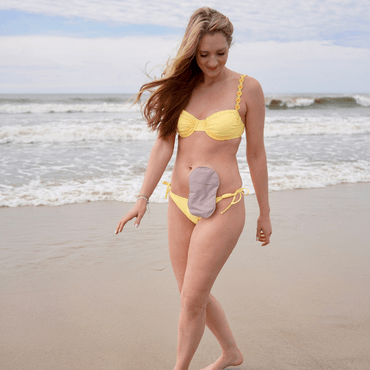
Esteem Body™ is made with water-repellent fabric that dries quickly and helps minimise visible bulging under clothing.
Request free samples
Esteem Body™ is made with water-repellent fabric that dries quickly and helps minimise visible bulging under clothing.
Request free samples